Goals

- Transfer all HR document processing from external platforms to an internally developed system,

- Increase speed of legal processes in hiring, transferring, etc.,

- Make the system adaptable to different countries' and entities' laws and regulations.

Result

- Reduced 100% of reliance on SharePoint processes,

- Accelerated processes for HRs and managers, cutting employees' document handling time by 50%,

- Ensured compliance with all local labor laws through an adaptable UI.

Users

- HR specialists,

- People managers of various types.

My role

- UX/UI/Product design
- User research
- Wireframes / Prototypes
- Design hand-off
- Feature proposals
- Design system development
- Team consultancy

Team

- Product Owner
- Analysts
- UX/Product Designer
- 3 Developers
- QA
- HR Consultants

Challenges

- Ensured consistency of UX flows, as almost every HR or manager had already established their own workaround processes,

- Make the system adaptable to hundreds of differences in labor regulations across countries and legal entities.

Tools

Figma, Miro, Jira, Confluence, Kendo UI

Tools

Figma, Miro, Jira, Confluence, ChatGPT, Kendo UI

Duration

6+ months

Team

- Product Owner
- Analysts
- UX/Product Designer
- 3 Developers
- QA
- HR Consultants

My role

- UX/UI/Product design
- User research
- Wireframes / Prototypes
- Design hand-off
- Feature proposals
- Design system development
- Team consultancy

Result

- Reduced 100% of reliance on SharePoint processes,

- Accelerated processes for HRs and managers, cutting employees' document handling time by 50%,

- Ensured compliance with all local labor laws through an adaptable UI.

Users

- HR specialists,

- People managers of various types.

Challenges

- Ensured consistency of UX flows, as almost every HR or manager had already established their own workaround processes,

- Make the system adaptable to hundreds of differences in labor regulations across countries and legal entities.

Show design process

Task

It can come from:

Client
Big conceptual undefined requests.

Product Owner
User stories that need analysis, targeted on business needs.

Myself
Features and tunings to improve UX of final users.

Tasks can be:

Simple
You just do it. All the other team knows exactly how to do it.

Complex
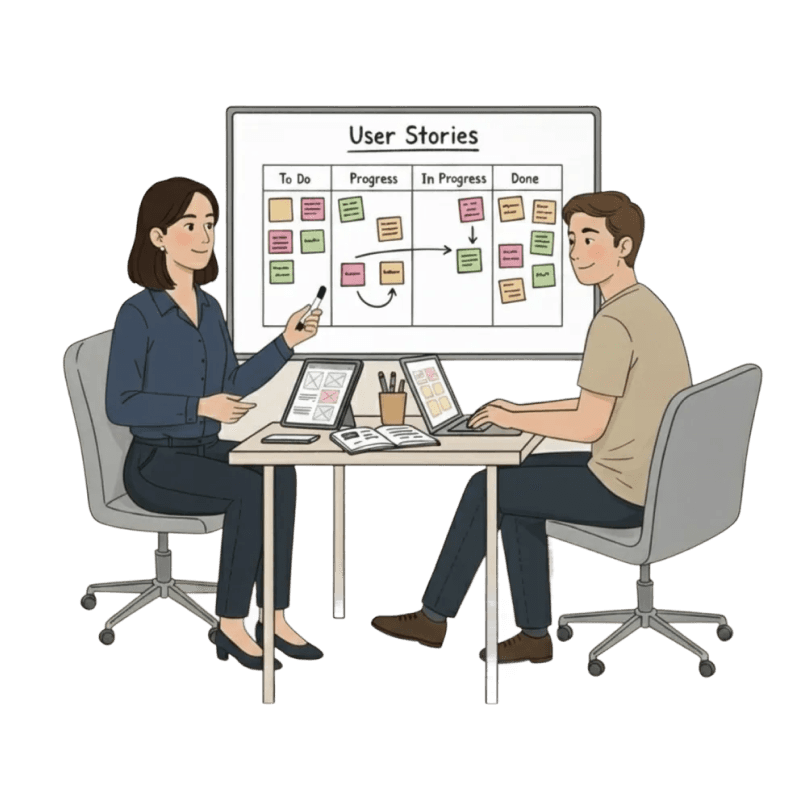
Nobody knows what the result will be, me included. These 30% of tasks - fuel for number of ideation workshops, analysis, iteration, user research and hours of discussions.

Draft & users

If task is "simple", I have two checks of wireframes:

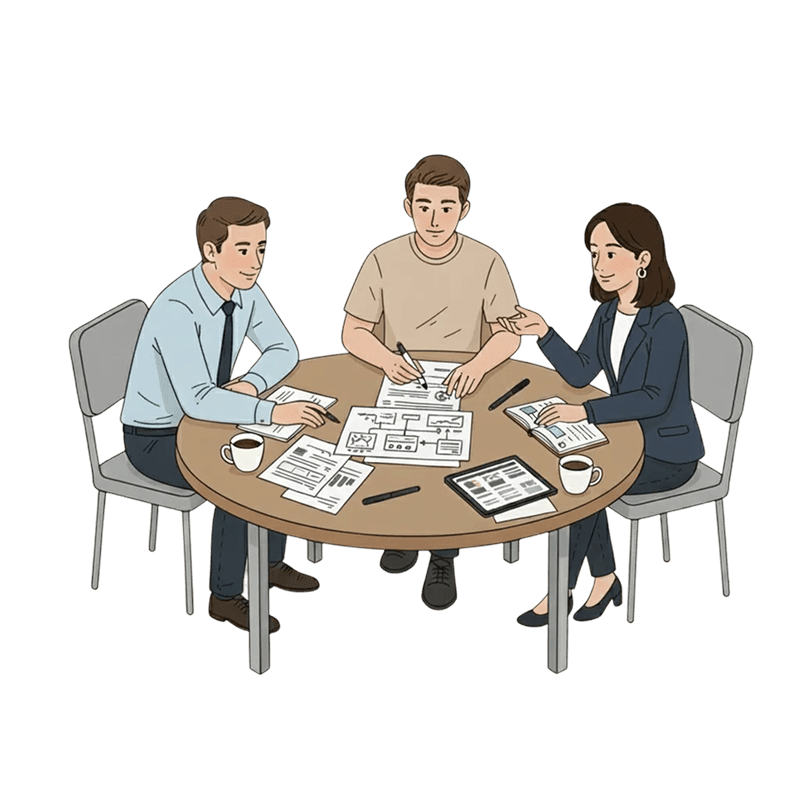
With Product Owner
If design answered business requirements.

With developers
If we can simplify design (without losing in UX) to speed up time to market.

If task is "complex", plus to those two I also have:

Brainstorm session with client
Sometimes it about them reinventing the whole business process. Sometimes it me to guide them into the right direction.

User interviews
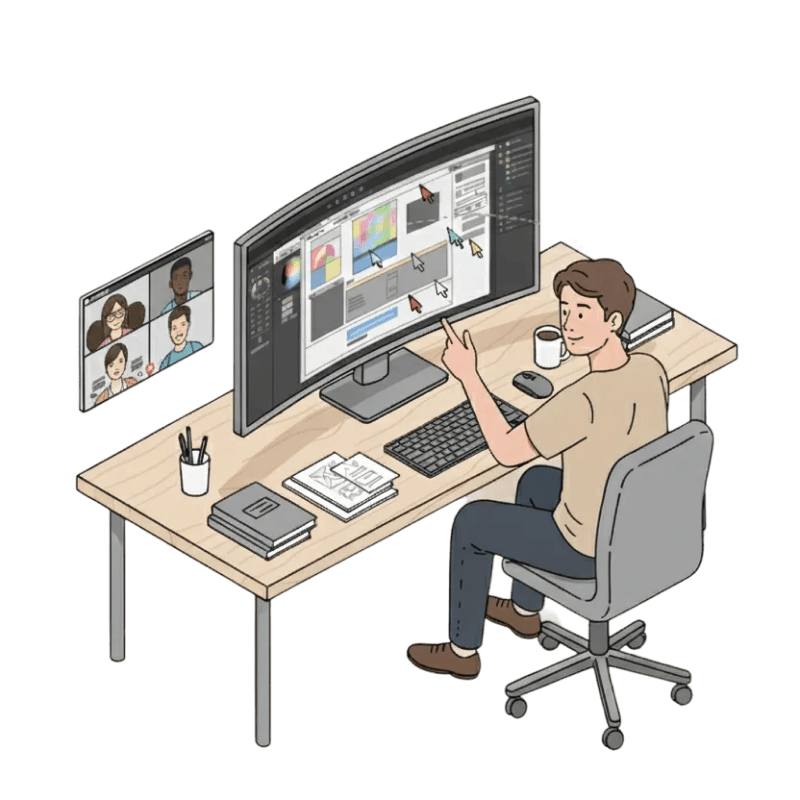
30-minutes calls with users where they perform some tasks on clickable prototype. Depends on my hypothesis proven or rejected, the Draft stage can have another iteration.

UI & hand-off

90% of time
I work with predefined design systems. So I build the entire UI from its components.

10% of time -
some unique solutions where discussion with developers is needed.

After we discussed the final design with the team, I prepare mockups (flows, comments, documentation if needed).

When someone starts to work on this task in sprint they invite me on the tasks kick-off, where we check everything we need to do.

After the task is ready, I have a design review during the task demo or myself on the dev stage.

Release

As I work in-house, I have control on what happens after the release.

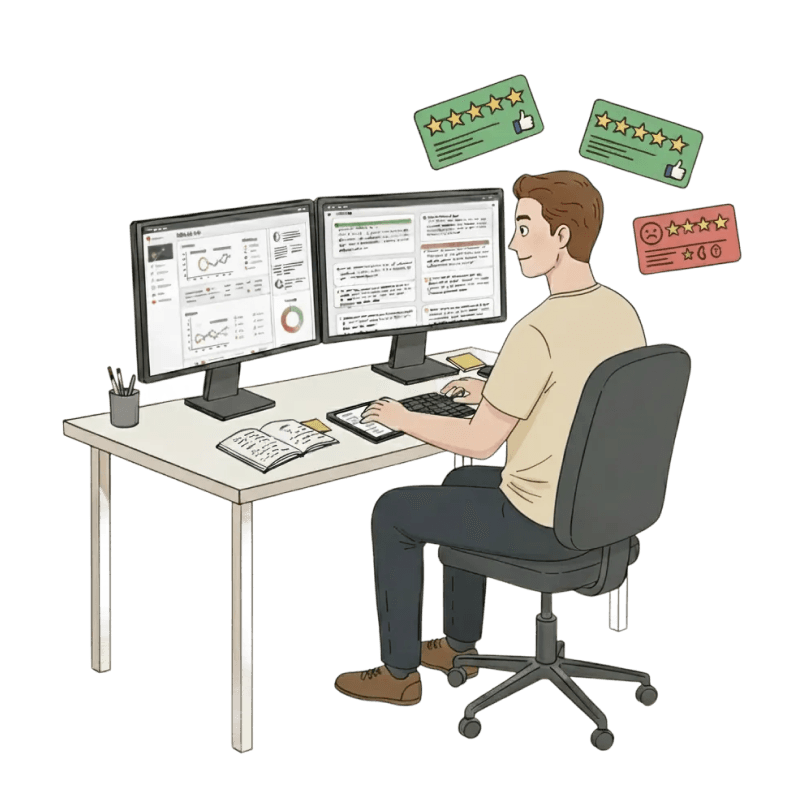
If feedback is negative and prioritized, I analys it it and go on the next iteration of design.

If feedback is positive, I can propose that new feature/pattern/flow for another product in our ecosystem. Yes, I test design innovations on selected products before the whole-ecosystem implementation.

Show design process

Show design process

Task

It can come from:

Client
Big conceptual undefined requests.

Product Owner
User stories that need analysis, targeted on business needs.

Myself
Features and tunings to improve UX of final users.

Tasks can be:

Simple
You just do it. All the other team knows exactly how to do it.

Complex
Nobody knows what the result will be, me included. These 30% of tasks - fuel for number of ideation workshops, analysis, iteration, user research and hours of discussions.

Draft & users

If task is "simple", I have two checks of wireframes:

With Product Owner
If design answered business requirements.

With developers
If we can simplify design (without losing in UX) to speed up time to market.

If task is "complex", plus to those two I also have:

Brainstorm session with client
Sometimes it about them reinventing the whole business process. Sometimes it me to guide them into the right direction.

User interviews
30-minutes calls with users where they perform some tasks on clickable prototype. Depends on my hypothesis proven or rejected, the Draft stage can have another iteration.

UI & hand-off

90% of time
I work with predefined design systems. So I build the entire UI from its components.

10% of time -
some unique solutions where discussion with developers is needed.

After we discussed the final design with the team, I prepare mockups (flows, comments, documentation if needed).

When someone starts to work on this task in sprint they invite me on the tasks kick-off, where we check everything we need to do.

After the task is ready, I have a design review during the task demo or myself on the dev stage.

Release

As I work in-house, I have control on what happens after the release.

If feedback is negative and prioritized, I analys it it and go on the next iteration of design.

If feedback is positive, I can propose that new feature/pattern/flow for another product in our ecosystem. Yes, I test design innovations on selected products before the whole-ecosystem implementation.

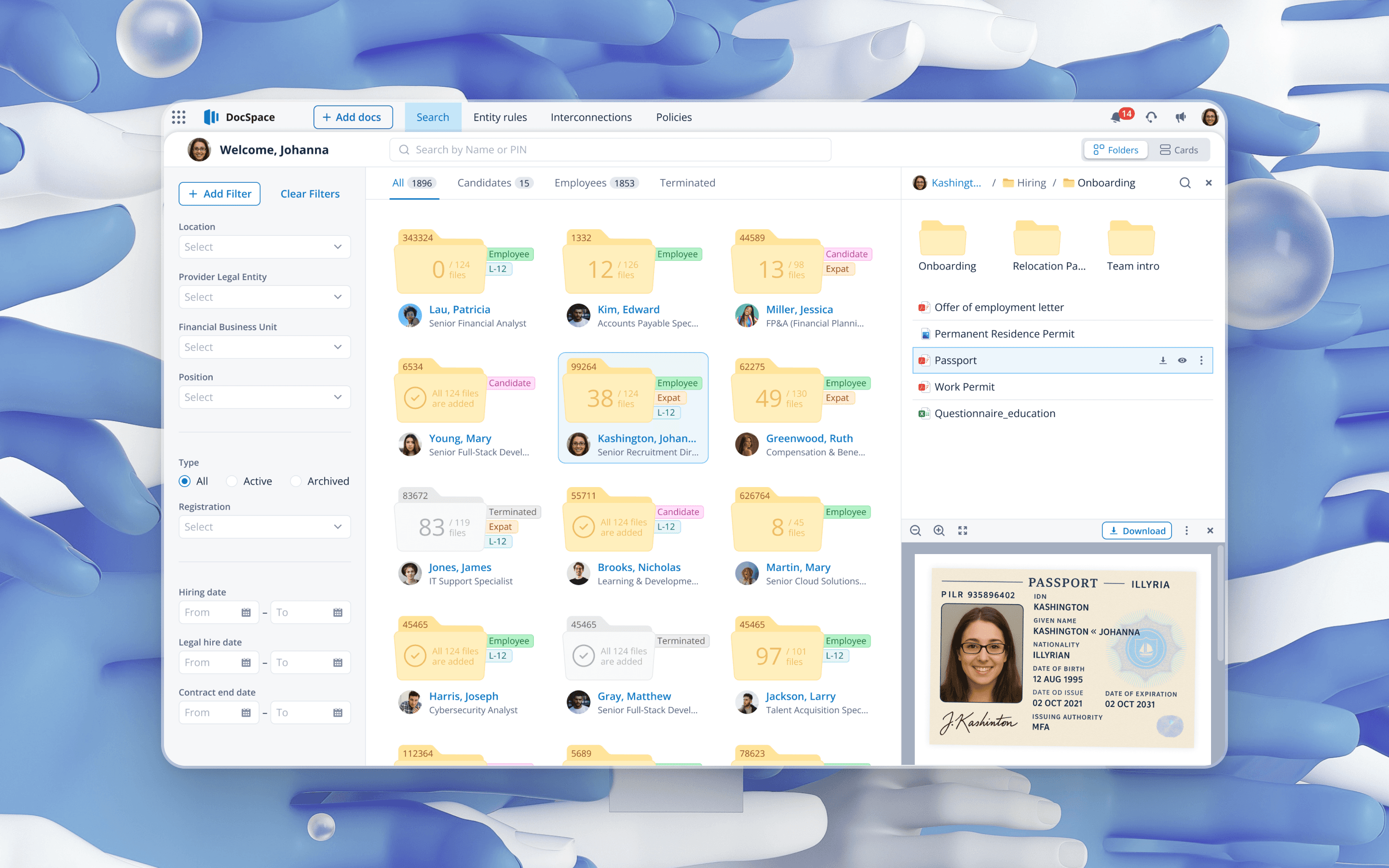
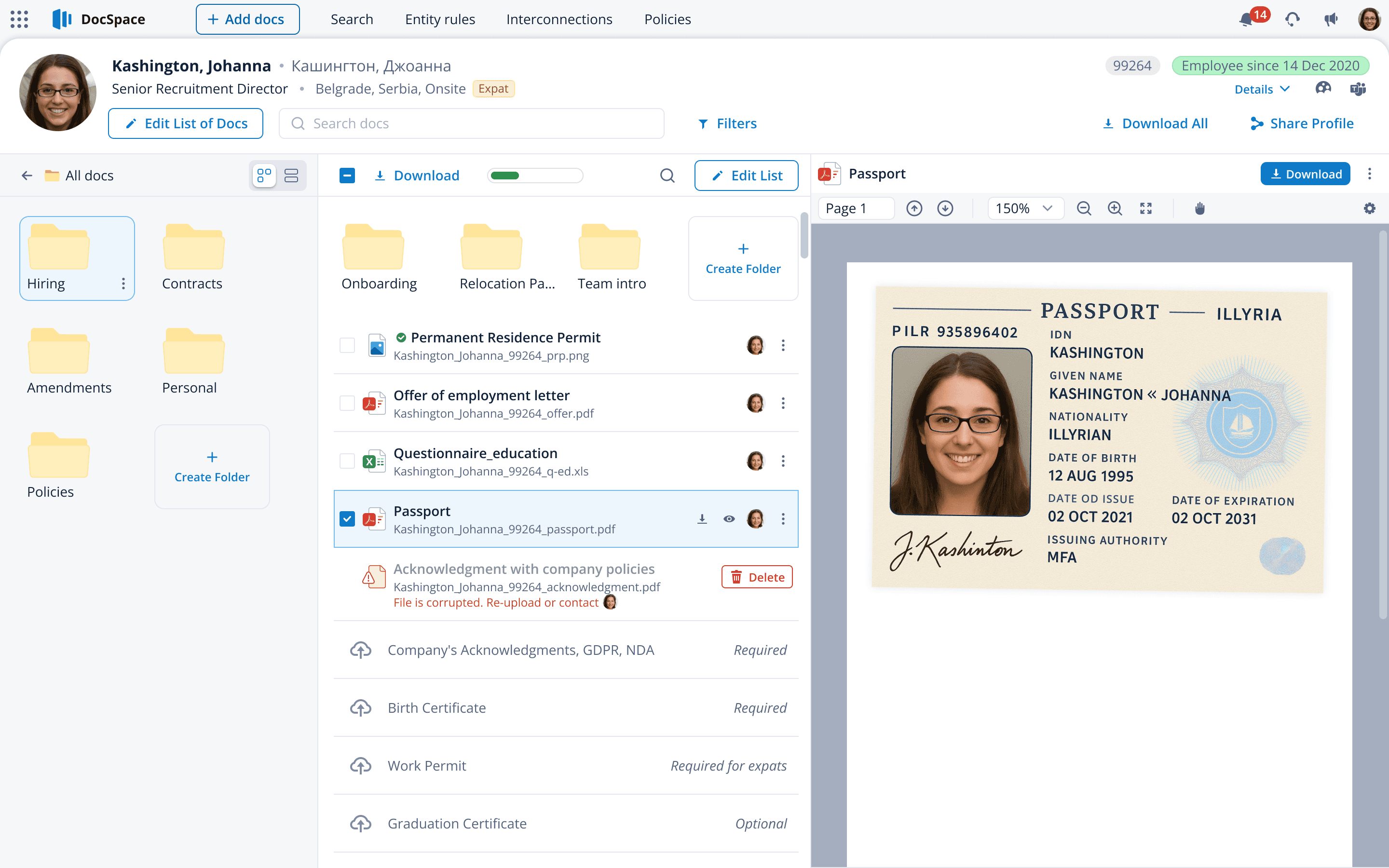
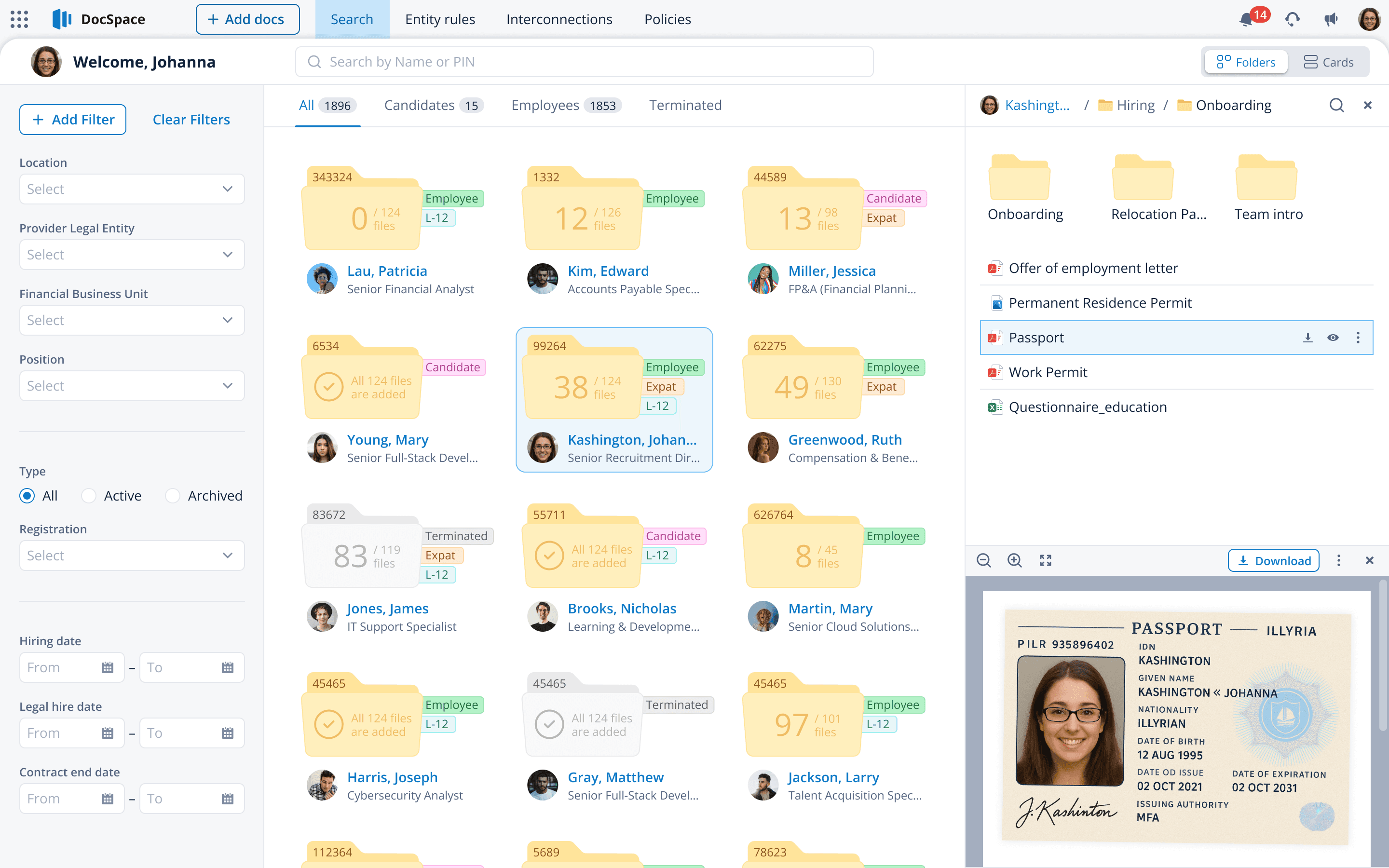
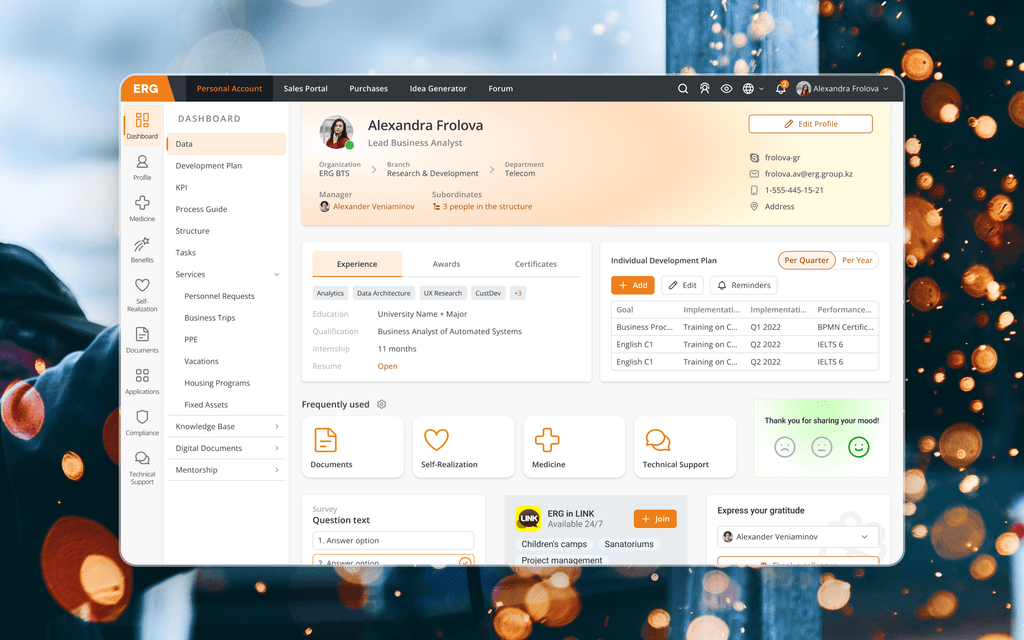
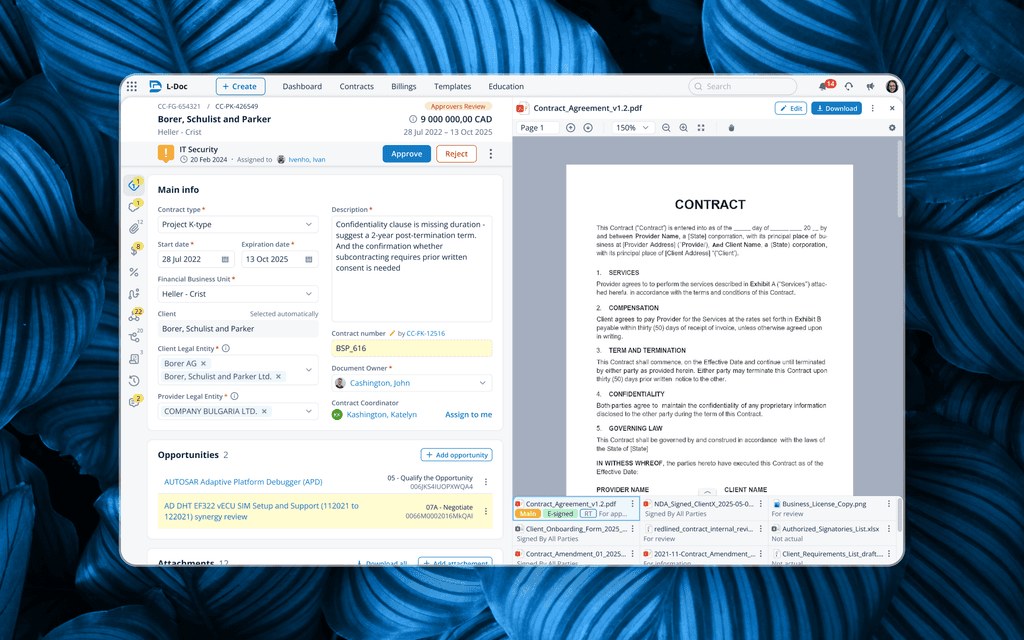
It's a system for processing documents - not for the company's clients, but for its employees. Previously, everything was handled through SharePoint, spreadsheets, and local folder systems on individual computers.

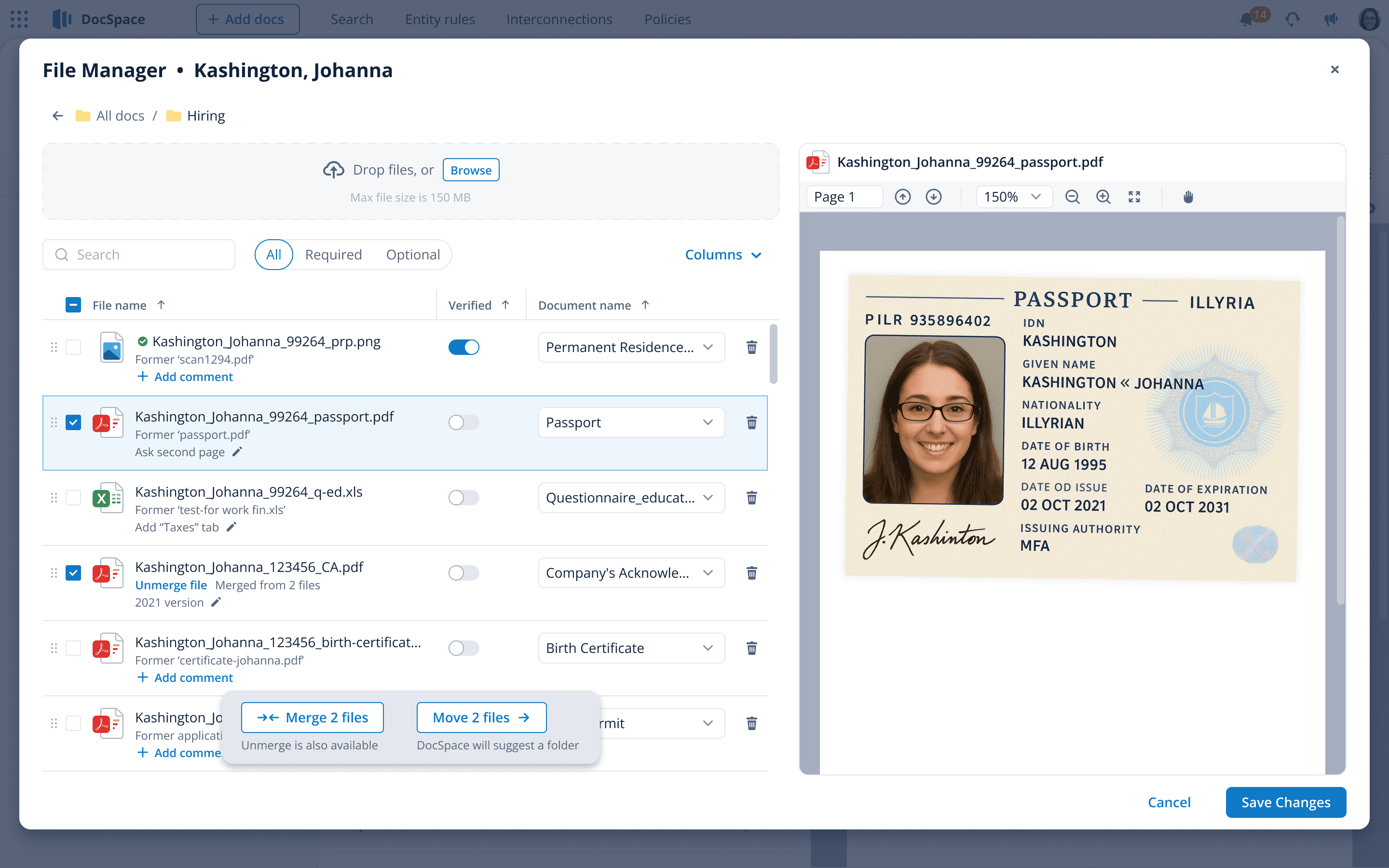
In addition to obvious process and audit challenges, there were significant human and ergonomic issues:

- Dozens of copies of the same file, e.g., "File Name (2)",

- Both digital and physical copies with small differences that could be either unimportant or crucial,

- Small screen sizes on corporate equipment used for document processing,

- Some files were editable PDFs, while others were scanned PDFs (non-editable images).

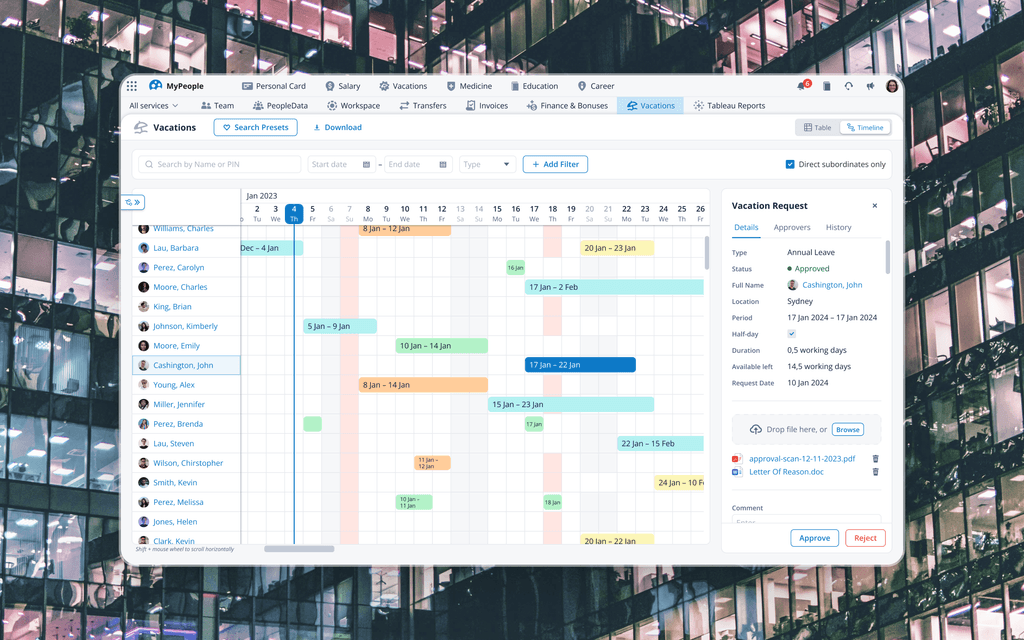
Of course, everyone involved had their own ways of handling the process. That's why, to make things familiar, I took a "folder system" approach - it looked almost the same as what people were used to, but still included additional functionality to perform all actions in one place without disruption. It was also connected to other HR systems within the company, so users saved time by avoiding constant tab switching and repeated logins.


50%

higher speed of document processes

100%

of removing third-party tools like SharePoint

50%

higher speed of document processes

100%

of removing third-party tools like SharePoint

50%

higher speed of document processes

100%

of removing third-party tools like SharePoint

This system was built on our EDMS foundation. I helped the team significantly improve the entire process by reusing all the experience I had gained from three years of developing it. The same approach applied to the design system and established research methods.

NDA disclaimer: The images shown on this page are drafts, concepts or high-fidelity wireframes and do not reflect the final product. All names, numbers, titles, charts, and other data are fictitious.

NDA disclaimer: The images shown on this page are drafts, concepts or high-fidelity wireframes and do not reflect the final product. All names, numbers, titles, charts, and other data are fictitious.

NDA disclaimer: The images shown on this page are drafts, concepts or high-fidelity wireframes and do not reflect the final product. All names, numbers, titles, charts, and other data are fictitious.