Goals

Provide exclusive features for the PMO to become the all-in-one tool for project managers.

- Minimize reliance on third-party tools,

- Introduce distinct functionalities not found in other PMO software,

- Lower maintenance expenses by advocating for in-house solutions,

- Enhance user experience and ensure alignment and integration with other enterprise systems.

My role

- UX/UI/Product design
- User research
- Wireframes / Prototypes
- Stakeholder management
- Design hand-off
- Reviews and docs
- Presentations
- Facilitating workshops
- Feature proposals
- Design system development
- Team consultancy

Team

- 5 key stakeholders
- Product Owner
- Analysts
- UX/Product Designer
- 4-5 Developers
- QA

Duration

2.5 years

Result

Designed over 40+ features for the project management office, decreasing managers' reliance on third-party tools by 90%.

Users

- 2,000+ project managers overseeing projects with a need to track the current state and perform regular internal and external audits,

- A small revision department (~30 people) ensuring project goals, standards, and processes compliance.

The PMO serves as a tracking tool tailored with distinct feature combinations for each group.

Challenges

- Project managers are accustomed to using various tools like Jira, Google Spreadsheet, Slack, and Tableau. Our challenge was to incorporate familiar patterns while meeting business needs.

- Transitioning systems wasn't a straightforward process. We navigated through multiple launch stages - MVP, alpha, beta - while integrating two systems simultaneously.
Tools

Figma, Miro, Jira, Confluence, ChatGPT, Kendo UI

Team

- 5 key stakeholders
- Product Owner
- Analysts
- UX/Product Designer
- 4-5 Developers
- QA

Tools

Figma, Miro, Jira, Confluence, ChatGPT, Kendo UI

Duration

2.5 years

My role

- UX/UI/Product design
- User research
- Wireframes / Prototypes
- Stakeholder management
- Design hand-off
- Reviews and docs
- Presentations
- Facilitating workshops
- Feature proposals
- Design system development
- Team consultancy

Result

- Designed 50+ features, reducing managers' reliance on third-party tools by 90%,

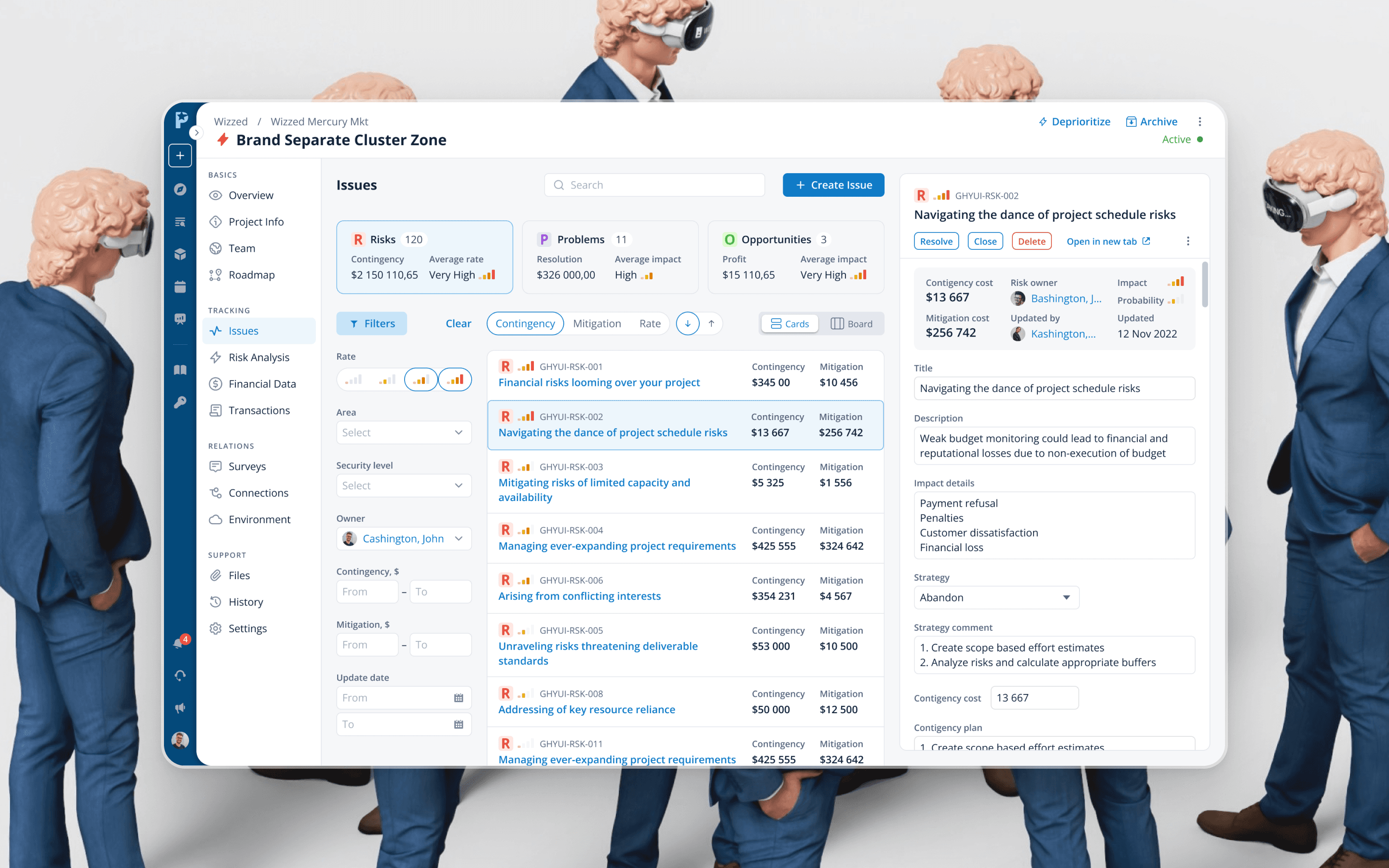
- Built a risk-tracking system, making audit speed 3x faster,

- Developed special UX patterns across the system, reducing core users' frustration in half (yes, it's trackable with enterprise users)

Users

- 2,000+ project managers overseeing projects with a need to track the current state and perform regular internal and external audits,

- A small revision department (30+ people) ensuring project goals, standards, and processes compliance.

The PMO serves as a tracking tool tailored with distinct feature combinations for each group.

Challenges

- Project managers are accustomed to using various tools like Jira, Google Spreadsheet, Slack, and Tableau. Our challenge was to incorporate familiar patterns while meeting business needs.

- Transitioning systems wasn't a straightforward process. We navigated through multiple launch stages - MVP, alpha, beta - while integrating two systems simultaneously.
Show design process

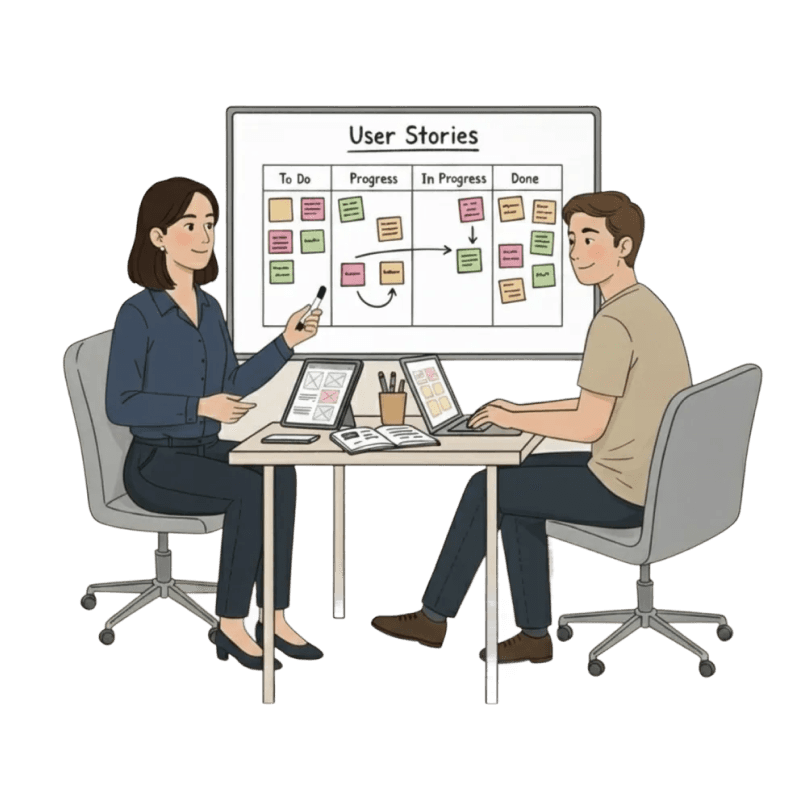
Task

It can come from:

Client
Big conceptual undefined requests.

Product Owner
User stories that need analysis, targeted on business needs.

Myself
Features and tunings to improve UX of final users.

Tasks can be:

Simple
You just do it. All the other team knows exactly how to do it.

Complex
Nobody knows what the result will be, me included. These 30% of tasks - fuel for number of ideation workshops, analysis, iteration, user research and hours of discussions.

Draft & users

If task is "simple", I have two checks of wireframes:

With Product Owner
If design answered business requirements.

With developers
If we can simplify design (without losing in UX) to speed up time to market.

If task is "complex", plus to those two I also have:

Brainstorm session with client
Sometimes it about them reinventing the whole business process. Sometimes it me to guide them into the right direction.

User interviews
30-minutes calls with users where they perform some tasks on clickable prototype. Depends on my hypothesis proven or rejected, the Draft stage can have another iteration.

UI & hand-off

90% of time
I work with predefined design systems. So I build the entire UI from its components.

10% of time -
some unique solutions where discussion with developers is needed.

After we discussed the final design with the team, I prepare mockups (flows, comments, documentation if needed).

When someone starts to work on this task in sprint they invite me on the tasks kick-off, where we check everything we need to do.

After the task is ready, I have a design review during the task demo or myself on the dev stage.

Release

As I work in-house, I have control on what happens after the release.

If feedback is negative and prioritized, I analys it it and go on the next iteration of design.

If feedback is positive, I can propose that new feature/pattern/flow for another product in our ecosystem. Yes, I test design innovations on selected products before the whole-ecosystem implementation.

Show design process

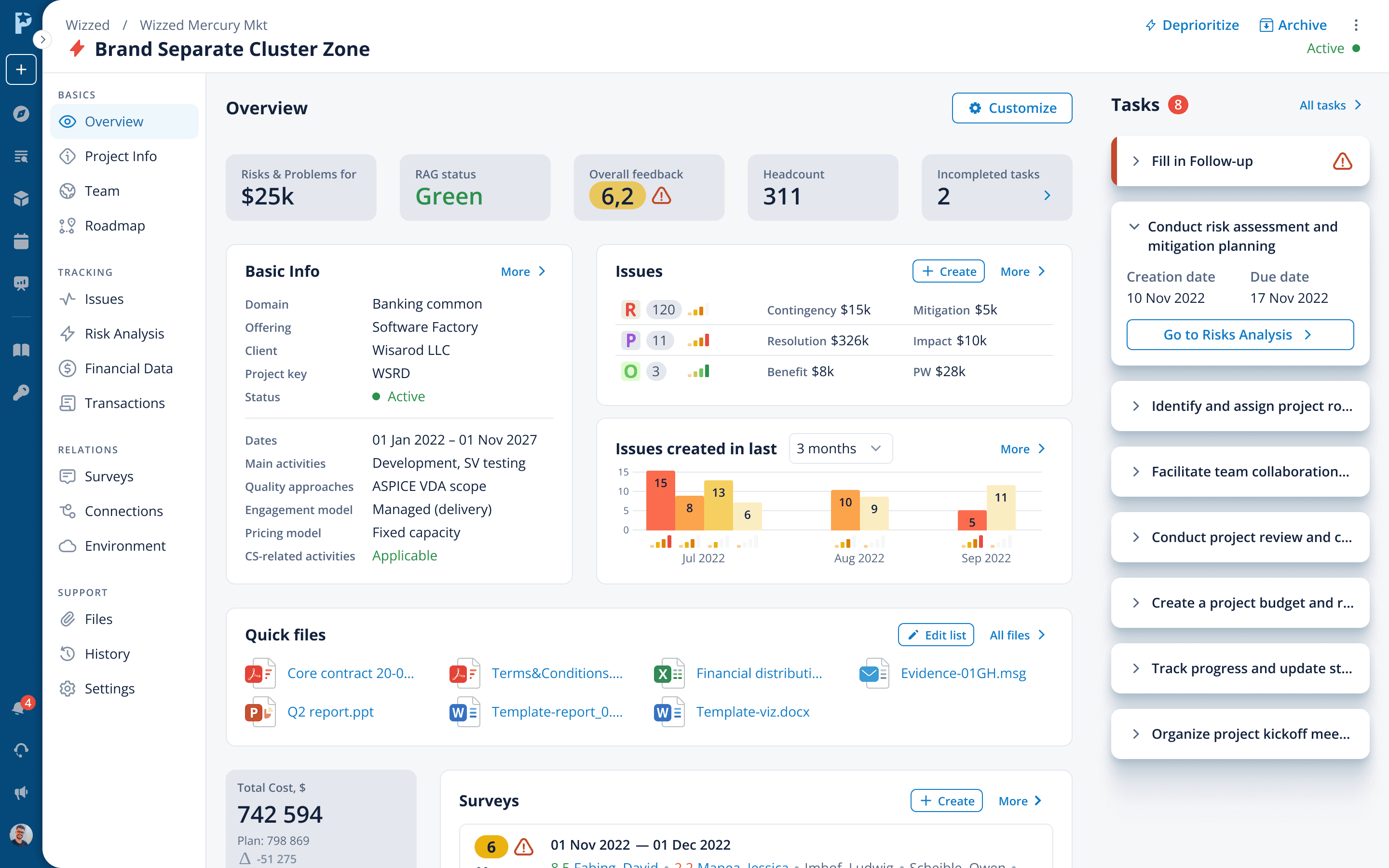
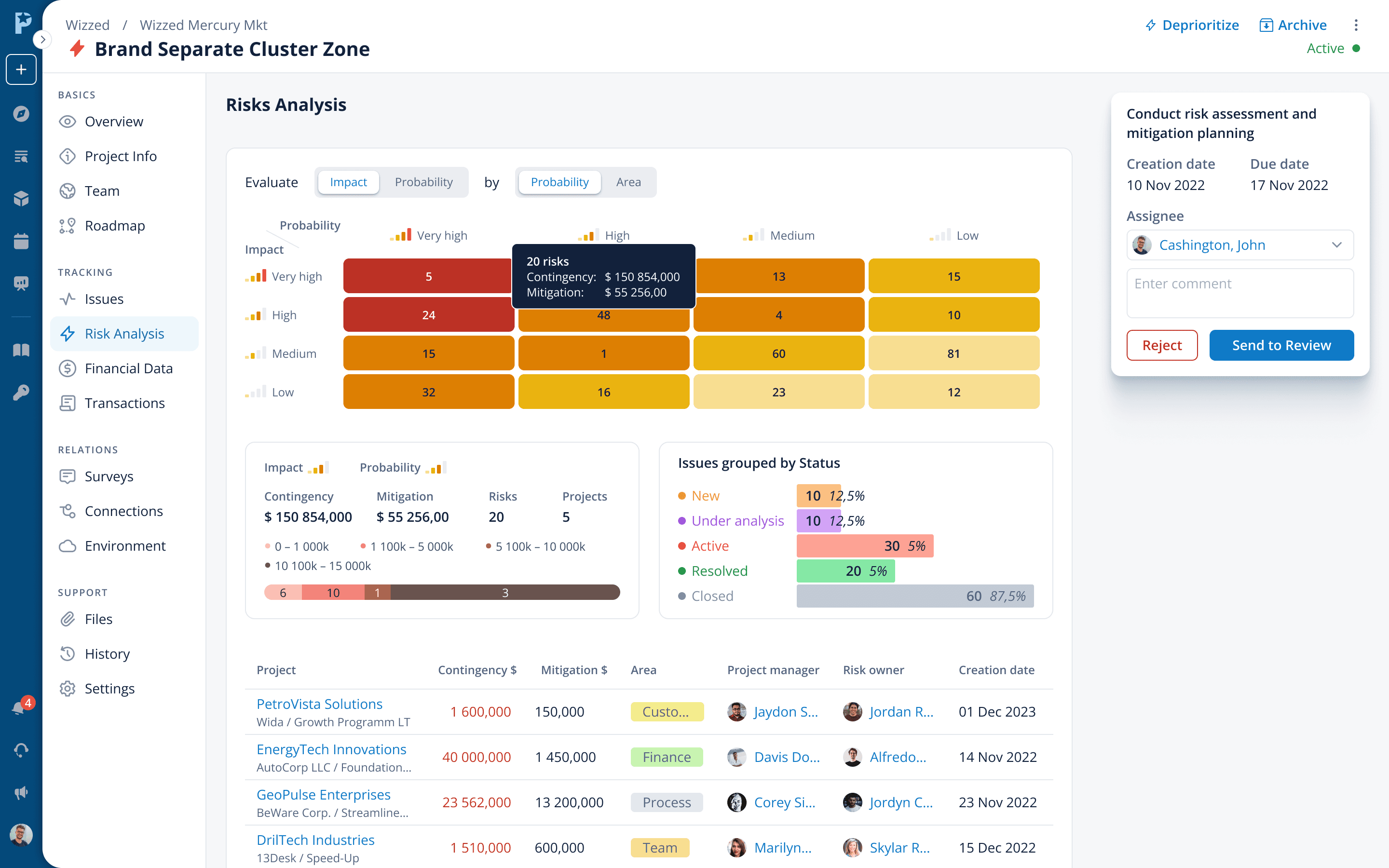
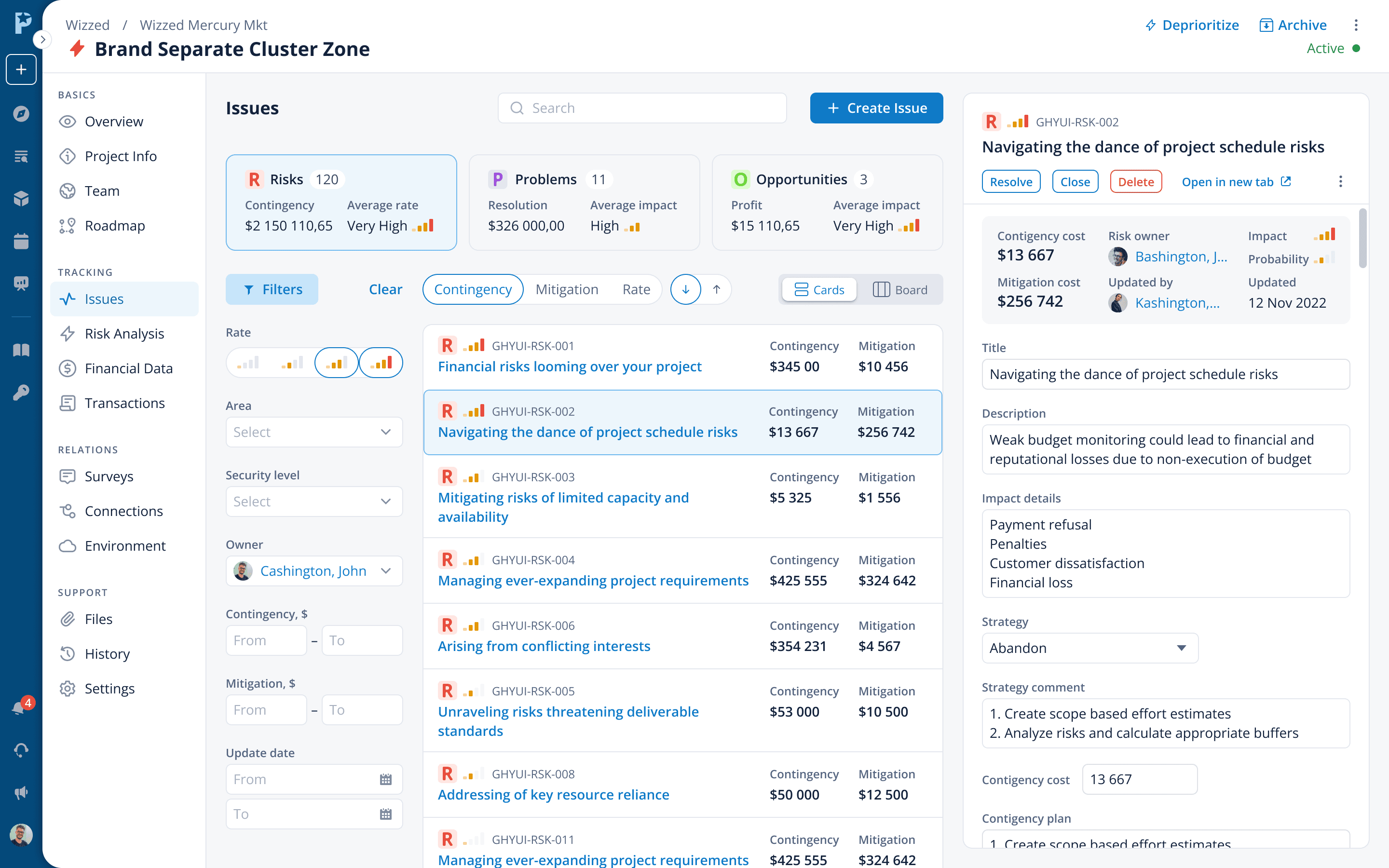
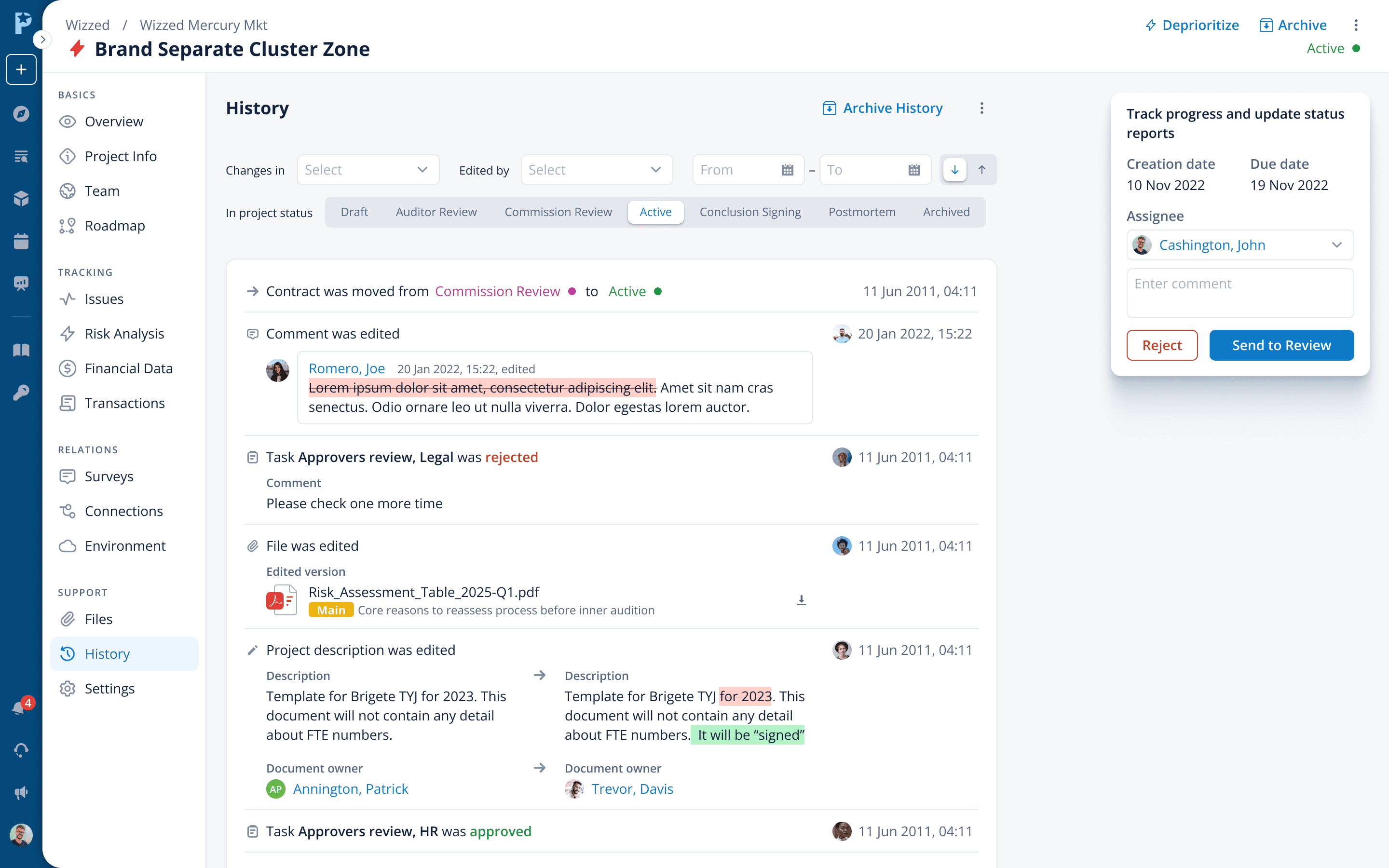
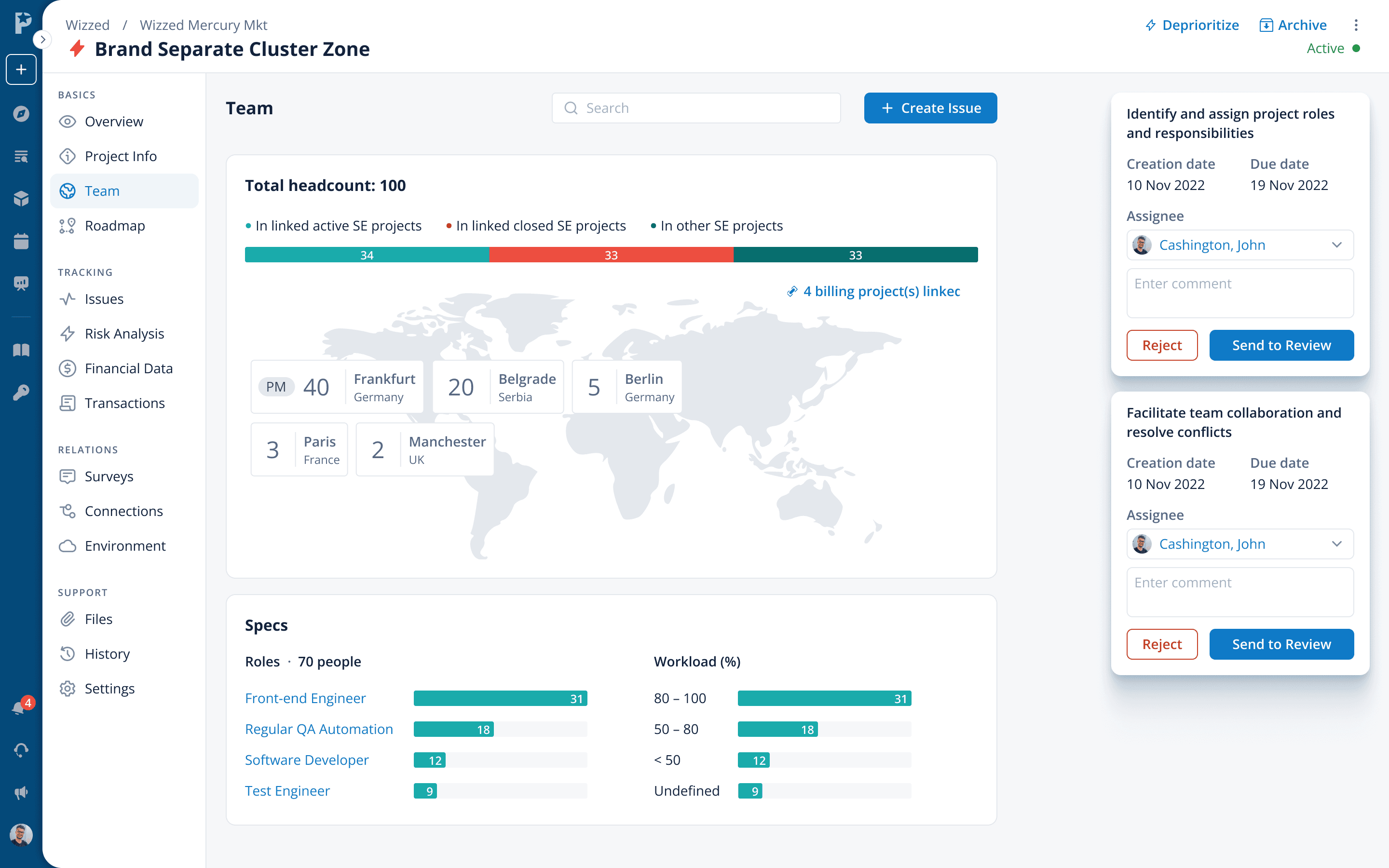
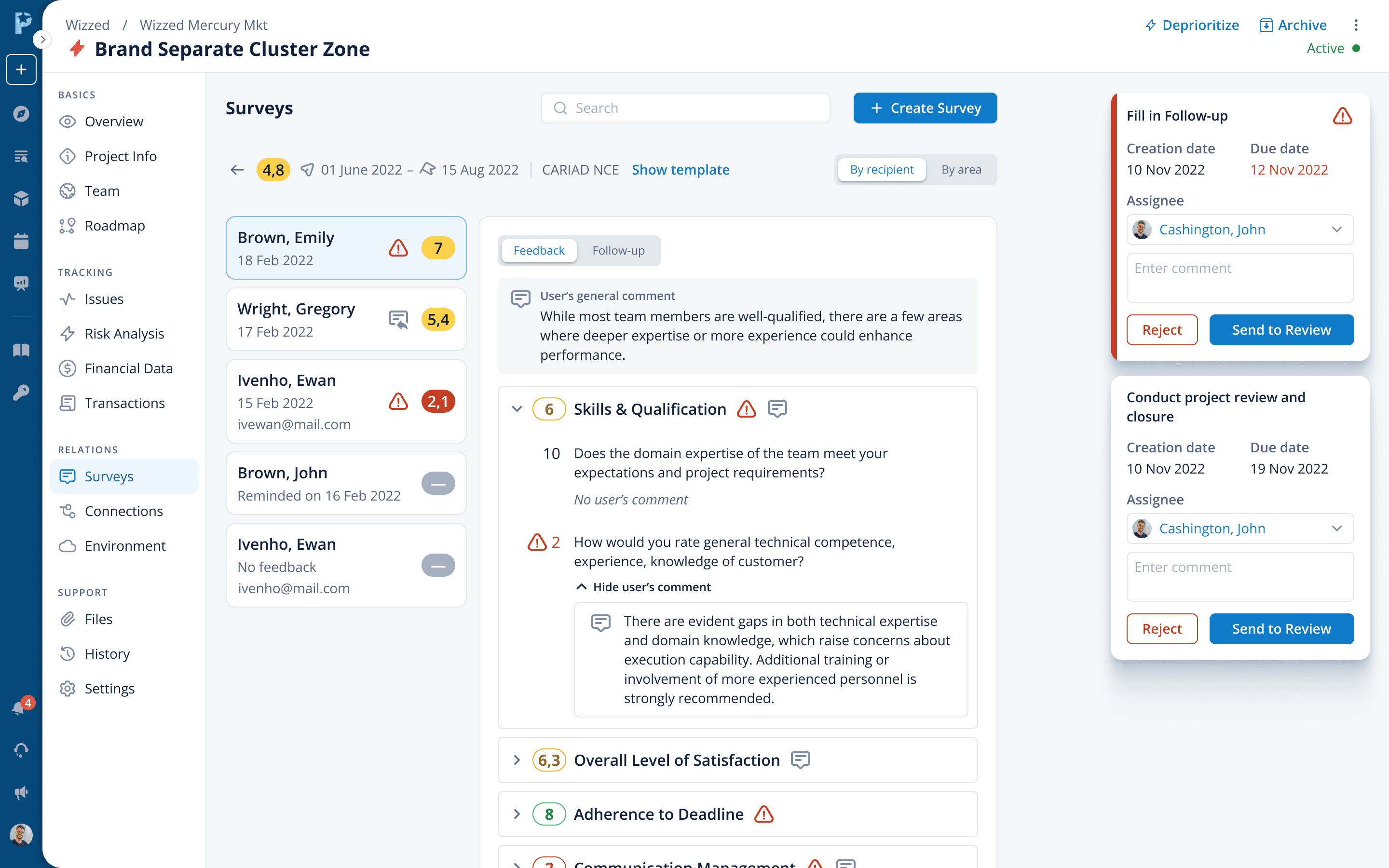
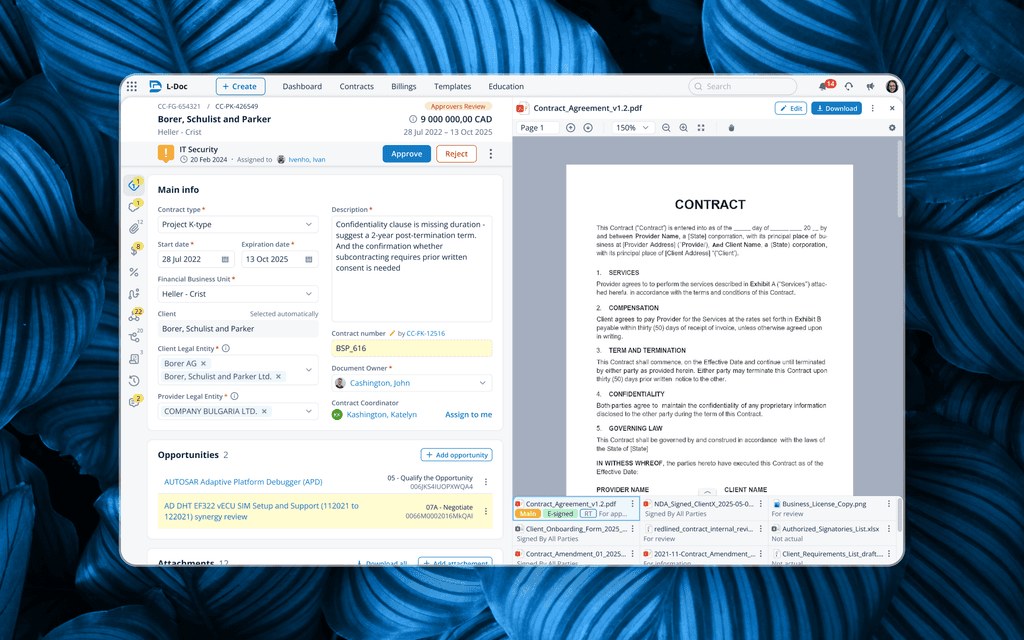
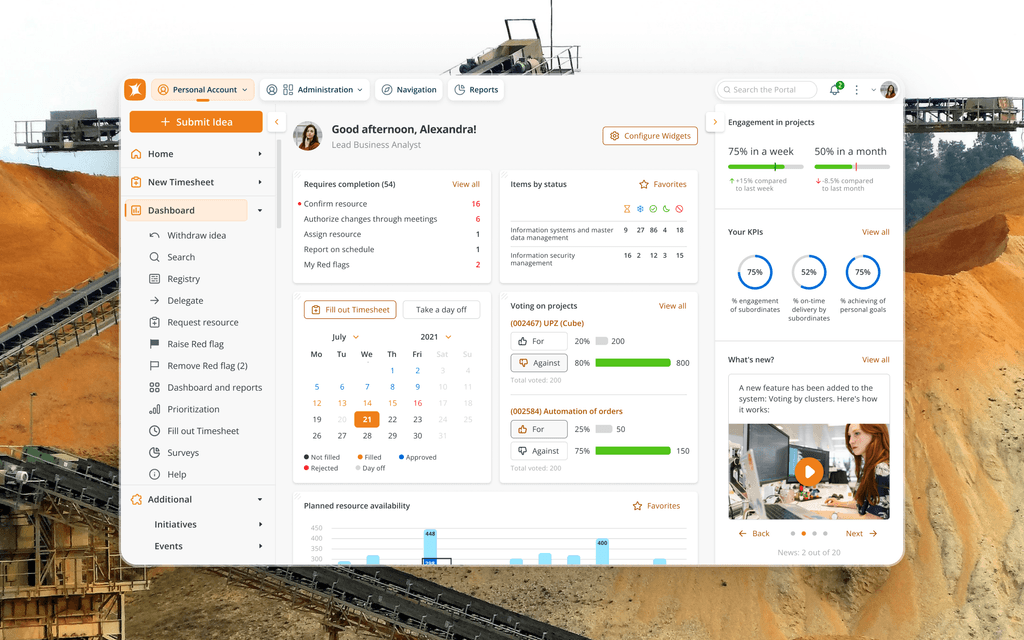
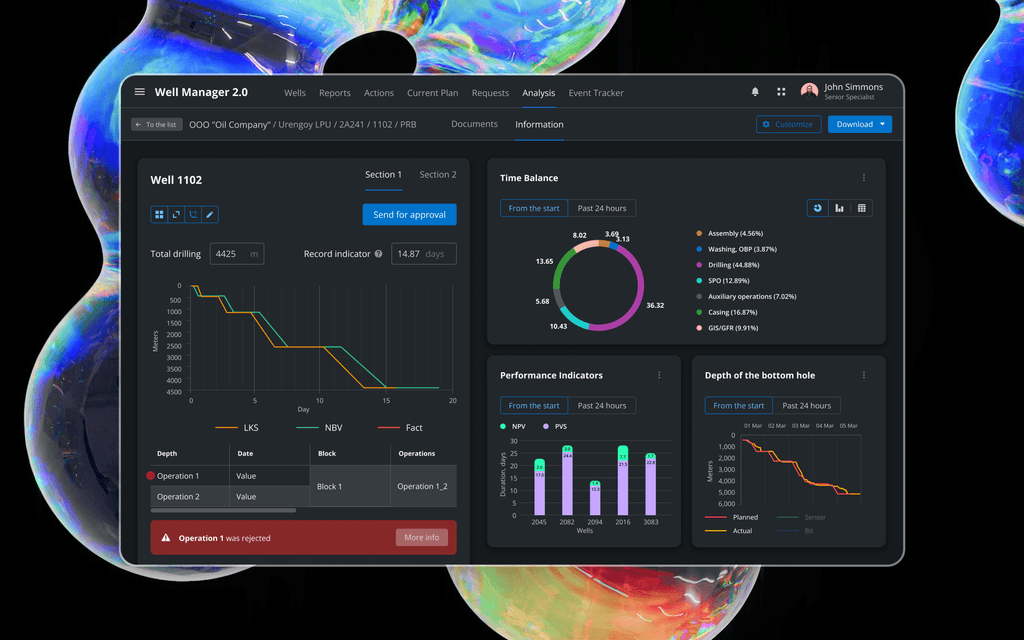
Project Management Office (PMO) helps project managers connect, track, and measure all aspects of their projects. It also supports audit teams in reviewing project pipelines and assisting in critical situations.

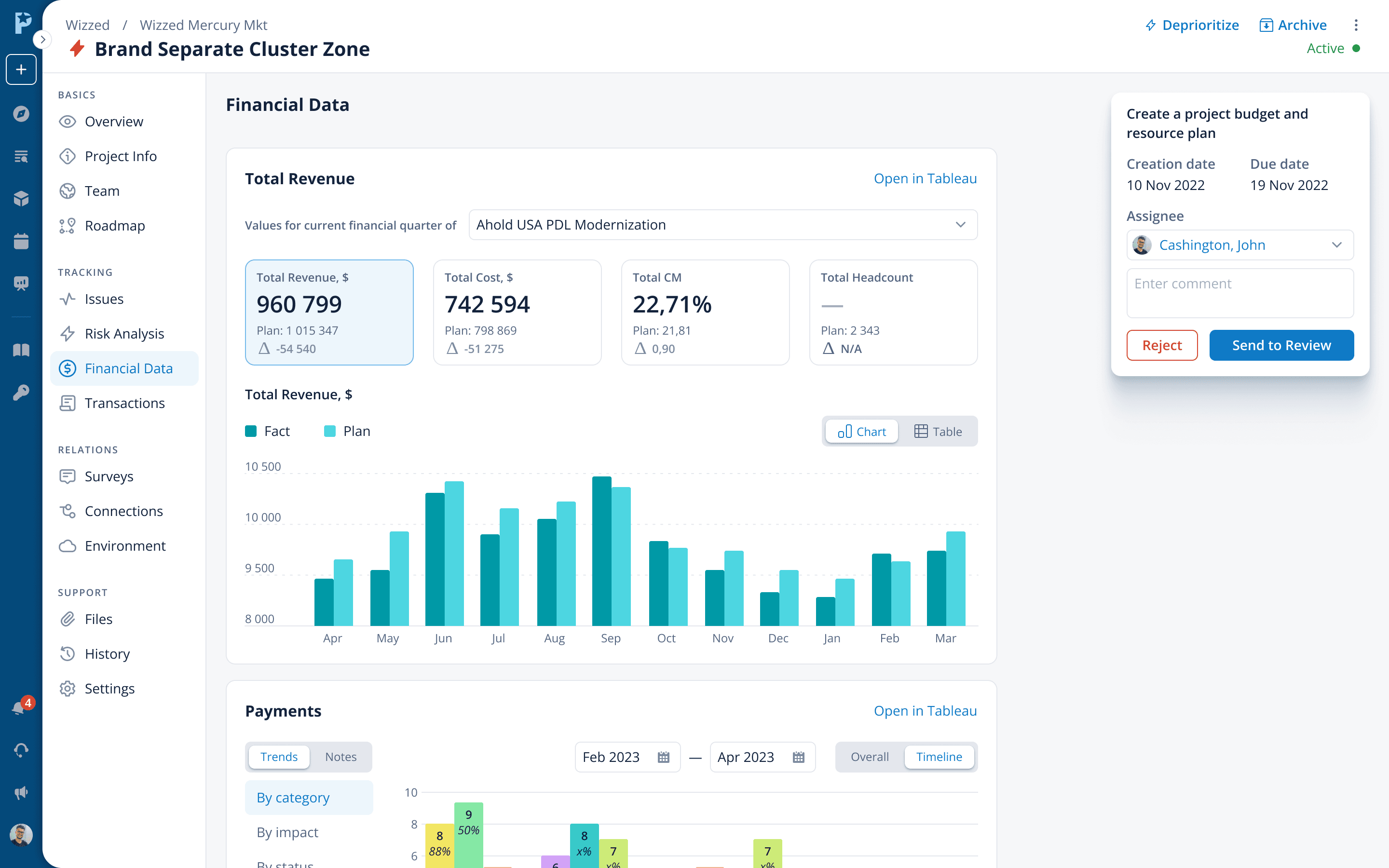
As an all-in-one tool, it provides role-specific dashboards, reporting capabilities, financial analysis, and headcount tracking.

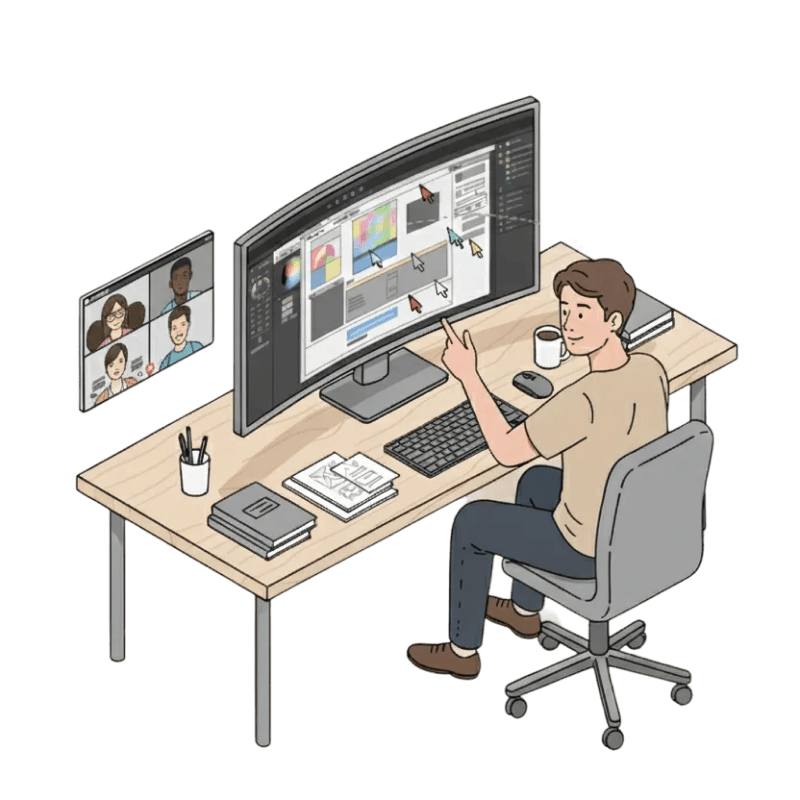
I applied a modular approach to designing this system. Each functionality was built to operate as a separate entity - it could be unplugged from one place and plugged into another, while still working seamlessly. I ensured this by unifying UI and UX patterns, which saved our team significant time and effort over the years. PMO was constantly evolving, and what worked for the MVP no longer suitable for a bigger product.

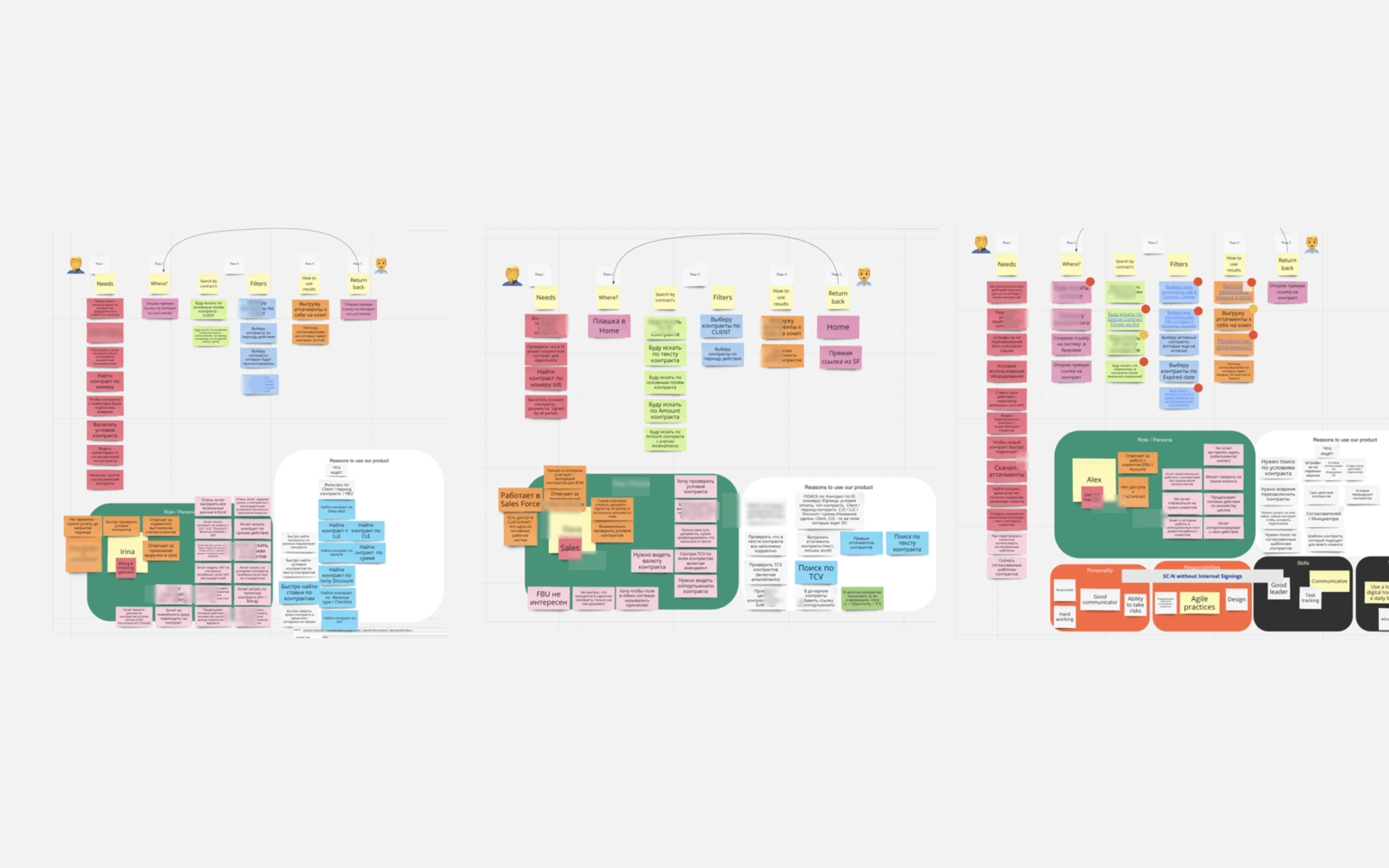
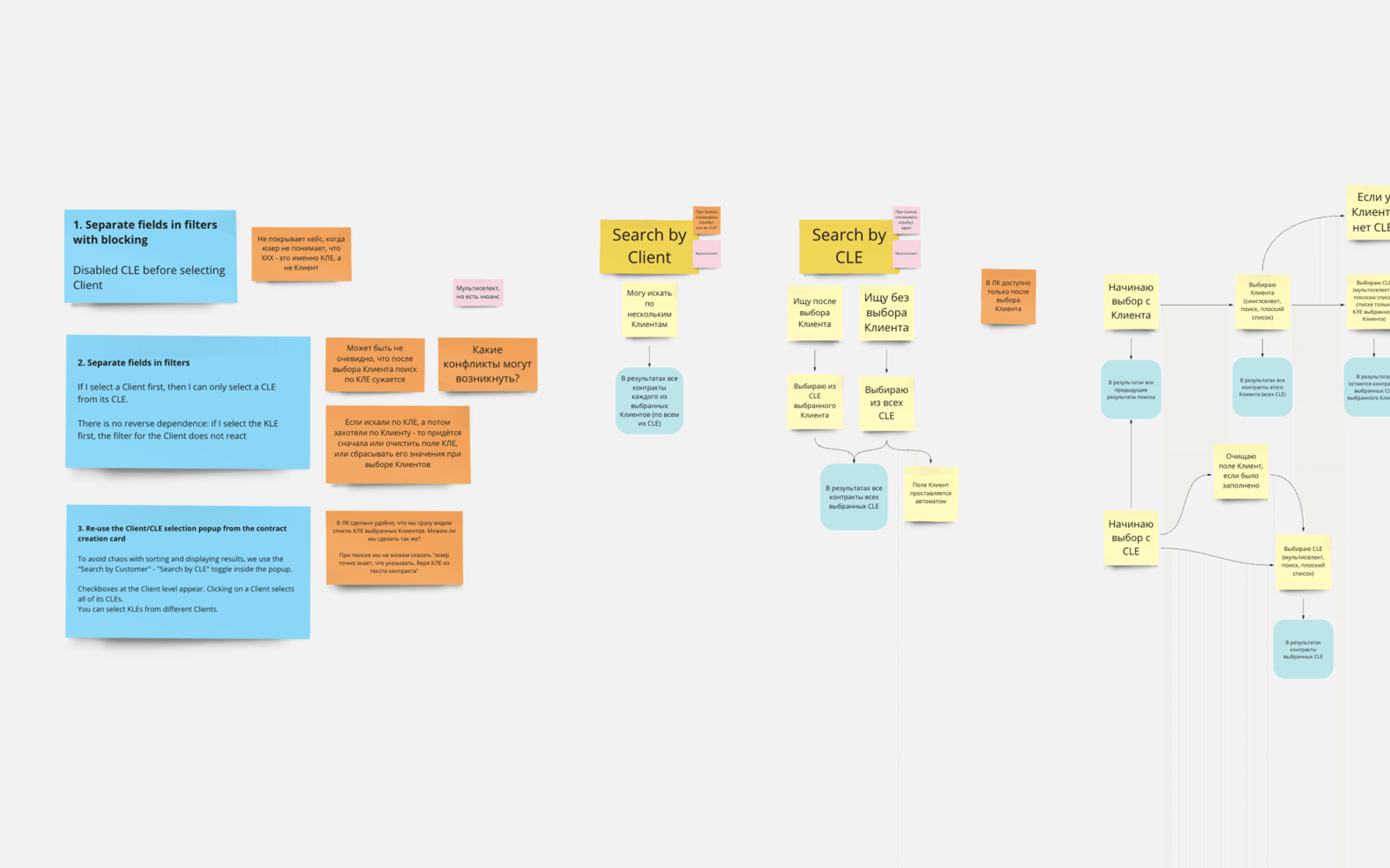
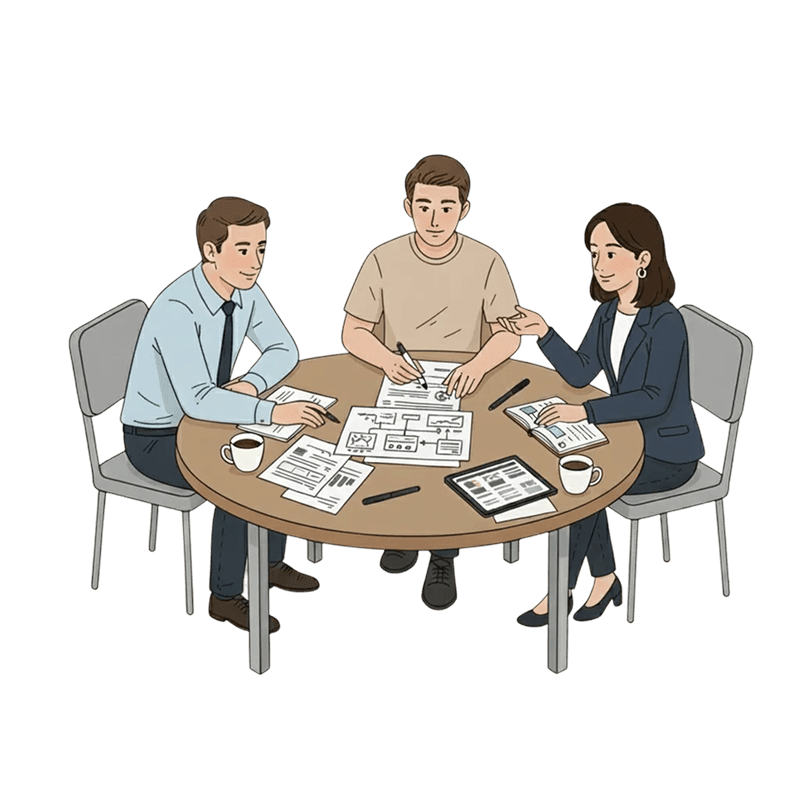
In the research phase, I worked alone on UX-focused user stories, and together with an analyst, product owner, and stakeholders on features involving complex business logic.

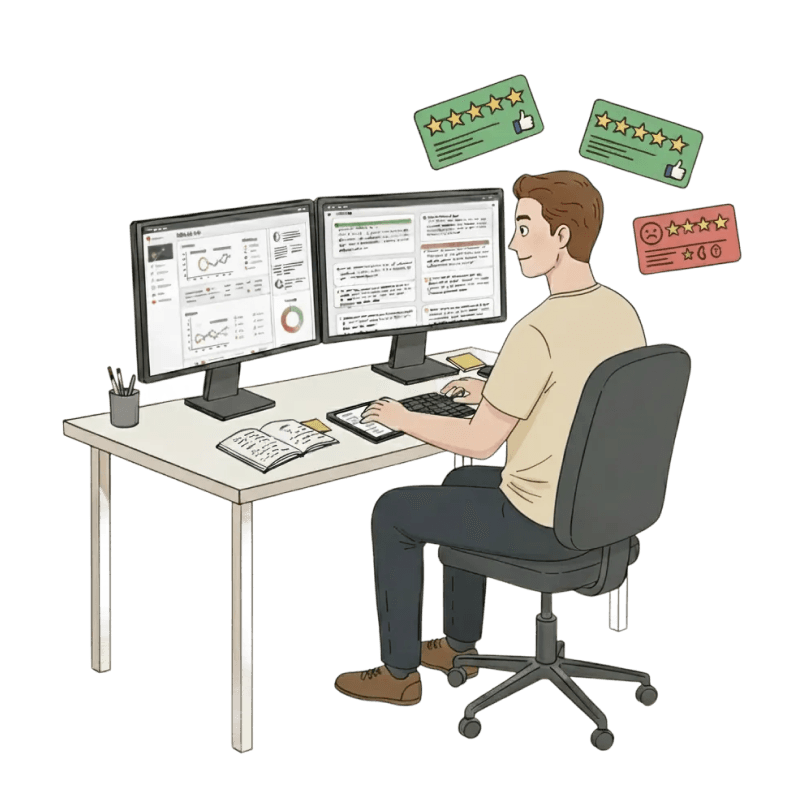
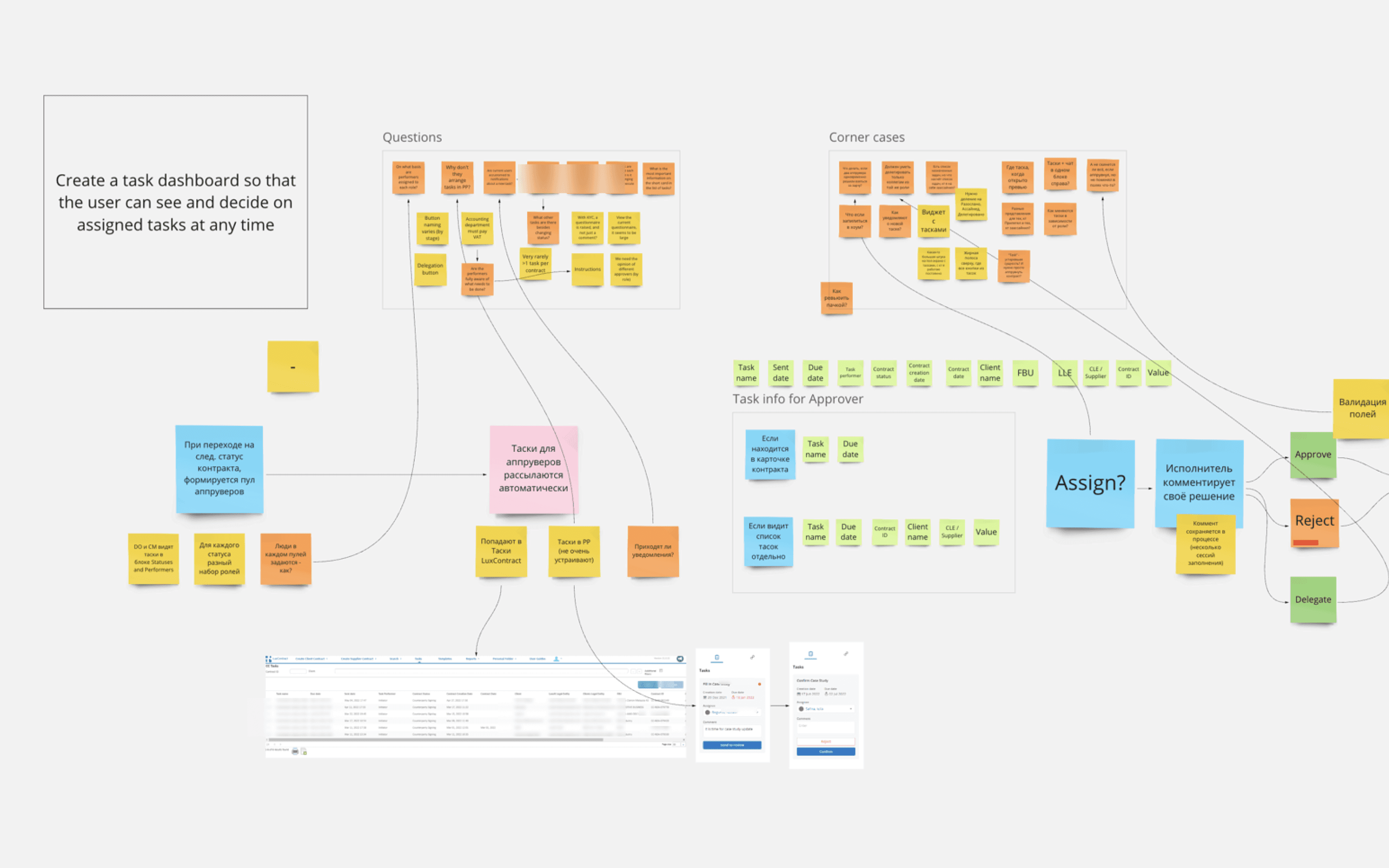
Project managers have many responsibilities beyond filling out spreadsheets or reports in this system. As a designer, I aimed to make these processes faster and easier, allowing them to complete tasks in the PMO quickly and focus on other pressing priorities.

Two key approaches I applied:

- Clearly indicate the state of each element to minimize cognitive effort and uncertainty. (no UI-puzzle solving and "ifs"),

- Reduce the time it takes for users to move from A to B by using shortcuts, large click targets, and grouping related elements to save time on physical hand movement.

I also considered that managers often use this tool during calls (less attention, more disturb) and on small laptops with trackpads while on the go (speak about ergonomics and situational disabilities).

3x

risk audit speed boost

90%

less reliance on third-party tools

3x

risk audit speed boost

90%

less reliance on third-party tools

One key task was moving project managers from Excel/Google spreadsheets to this system. While other tools might be faster or more customizable, they don’t scale well for audits, onboarding, or long-distance project management.

From a design perspective, this presented significant challenges. I knew I create the best UX possible, but it still would be compared to Microsoft, Google and Atlassian products. Actual users already had everything they need and like, so whatever perfect things this system has, they still disliked it, because they were made to use it.

Feedback from colleagues

To comply with GDPR, this website does not collect or store any personal data. Сlick on LinkedIn icon to see the person in real

To comply with GDPR, this website does not collect or store any personal data. Сlick on LinkedIn icon to see the person in real

<...> Vlad worked closely with the development and customer teams, which made the process of integrating his work into the project smooth and efficient. His participation in discussions made it possible to quickly make decisions about development, as well as lay down solutions for future problems. Vlad demonstrated an understanding of trends, approaches, technologies and shared his knowledge by spearheading design sessions for colleagues across the department. <...>

Senior Full Stack Test Engineer

We worked together for 3,5 years on PMO SaaS

<...> Vlad worked closely with the development and customer teams, which made the process of integrating his work into the project smooth and efficient. His participation in discussions made it possible to quickly make decisions about development, as well as lay down solutions for future problems. Vlad demonstrated an understanding of trends, approaches, technologies and shared his knowledge by spearheading design sessions for colleagues across the department. <...>

Senior Full Stack Test Engineer

We worked together for 3,5 years on PMO SaaS

<...> he [Vlad] consistently demonstrated UX expertise and a proactive approach to team collaboration. His ability to deliver impactful UX solutions enhanced our product's usability and user satisfaction. Vlad was actively involved in addressing team challenges, bringing a collaborative spirit and strong problem-solving skills to every project. His openness to feedback had a positive impact on our workflows and outcomes. <...>

Senior Business System Analyst

We spent 2 years untangling a complex product together

<...> he [Vlad] consistently demonstrated UX expertise and a proactive approach to team collaboration. His ability to deliver impactful UX solutions enhanced our product's usability and user satisfaction. Vlad was actively involved in addressing team challenges, bringing a collaborative spirit and strong problem-solving skills to every project. His openness to feedback had a positive impact on our workflows and outcomes. <...>

Senior Business System Analyst

We spent 2 years untangling a complex product together

<...> Vlad consistently demonstrates a deep understanding of the user needs and challenges that come with large-scale project. Vlad doesn't just design, but he highly dedicated himself in the domain area that allow him understand issues widely to be able to apply best user experience and achive company's goals and, more importantly, resonates with the end-user and developer team. <...>

Technical Lead / Solution Architect

2 years of working together on this product

<...> Vlad consistently demonstrates a deep understanding of the user needs and challenges that come with large-scale project. Vlad doesn't just design, but he highly dedicated himself in the domain area that allow him understand issues widely to be able to apply best user experience and achive company's goals and, more importantly, resonates with the end-user and developer team. <...>

Technical Lead / Solution Architect

2 years of working together on this product

In B2B/enterprise design, we often focus on metrics, tracking, business KPIs, and so on - but rarely on reducing users' anxiety when performing tasks they don’t want to do. In my case, emotional design played a key role. I created thematic "decorations" (yes, literally) for the system during winter holidays, Halloween, International Women's Day, and other occasions. Our system's mascots would change into Santa Clauses, and users could send funny postcards to each other within the system.

The results? Fewer conflicts between different user levels, appreciation from managers who finally felt the business cared about them, and yes - more timely reports and completed tasks.

NDA disclaimer: The images shown on this page are drafts, concepts or high-fidelity wireframes and do not reflect the final product. All names, numbers, titles, charts, and other data are fictitious.

NDA disclaimer: The images shown on this page are drafts, concepts or high-fidelity wireframes and do not reflect the final product. All names, numbers, titles, charts, and other data are fictitious.

NDA disclaimer: The images shown on this page are drafts, concepts or high-fidelity wireframes and do not reflect the final product. All names, numbers, titles, charts, and other data are fictitious.