Goals

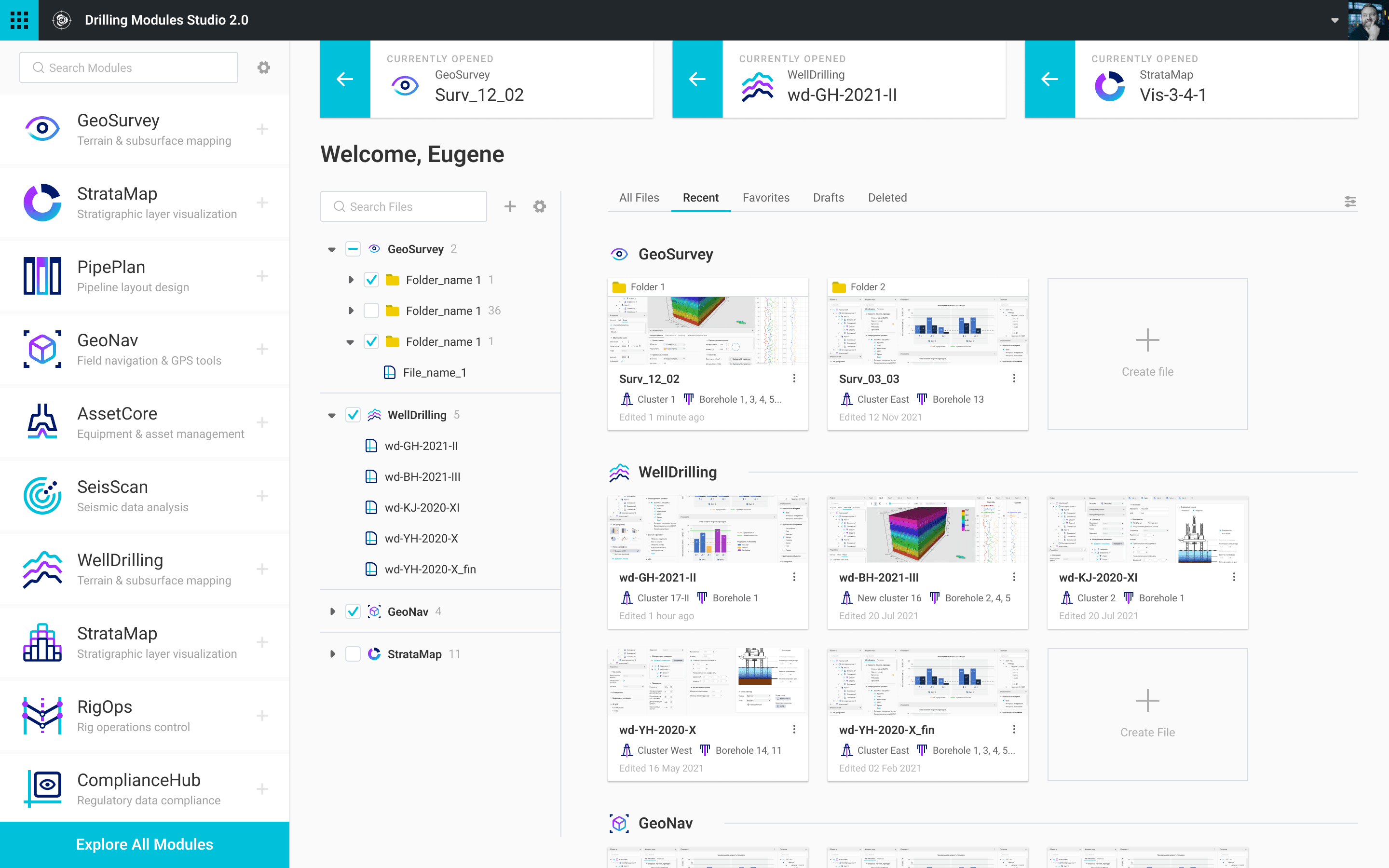
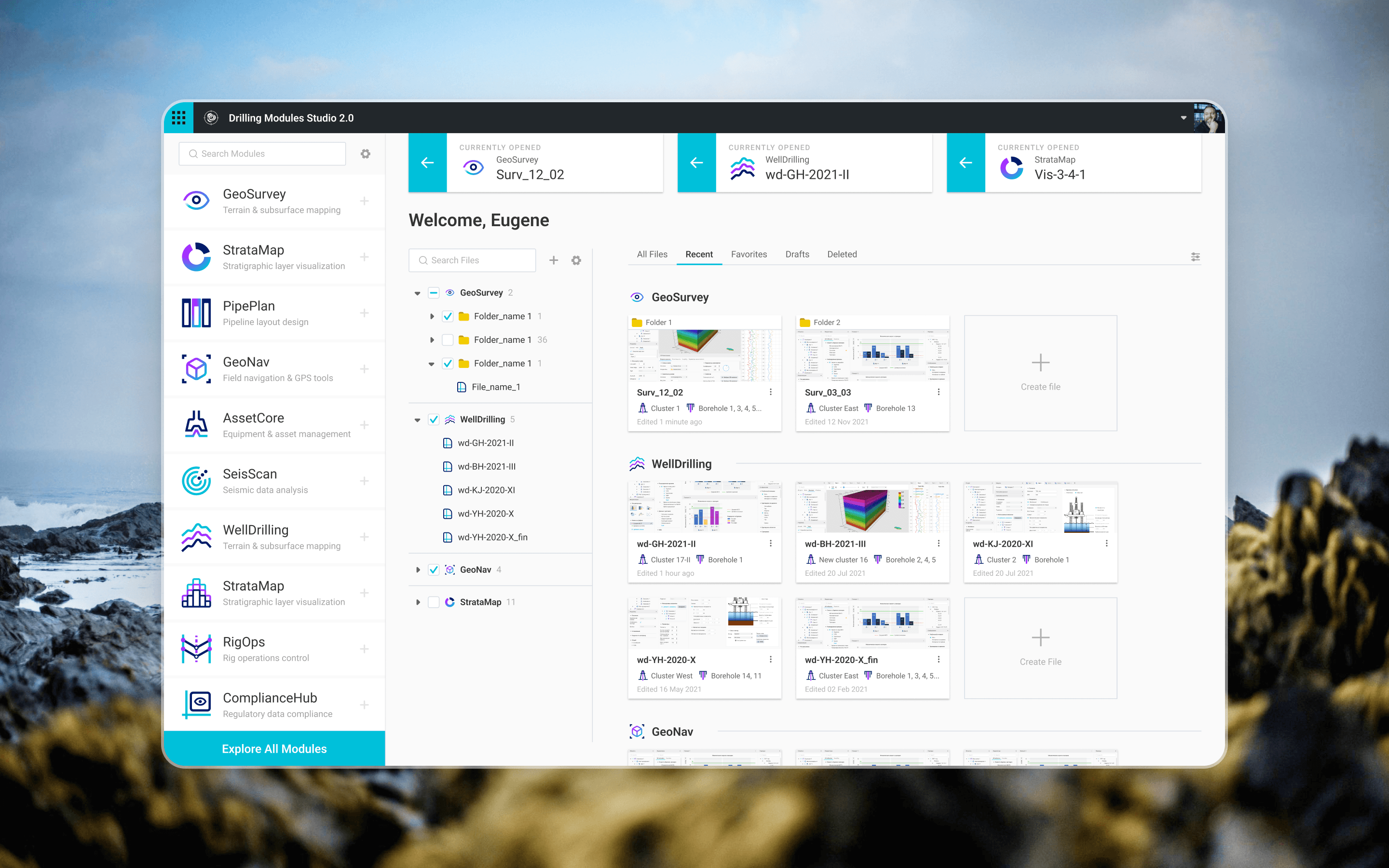
Unified a variety of the company's geodetic tools into a common environment.

- Designed a shell for a super-app,
- Created seamless UX across different modules within the common environment,
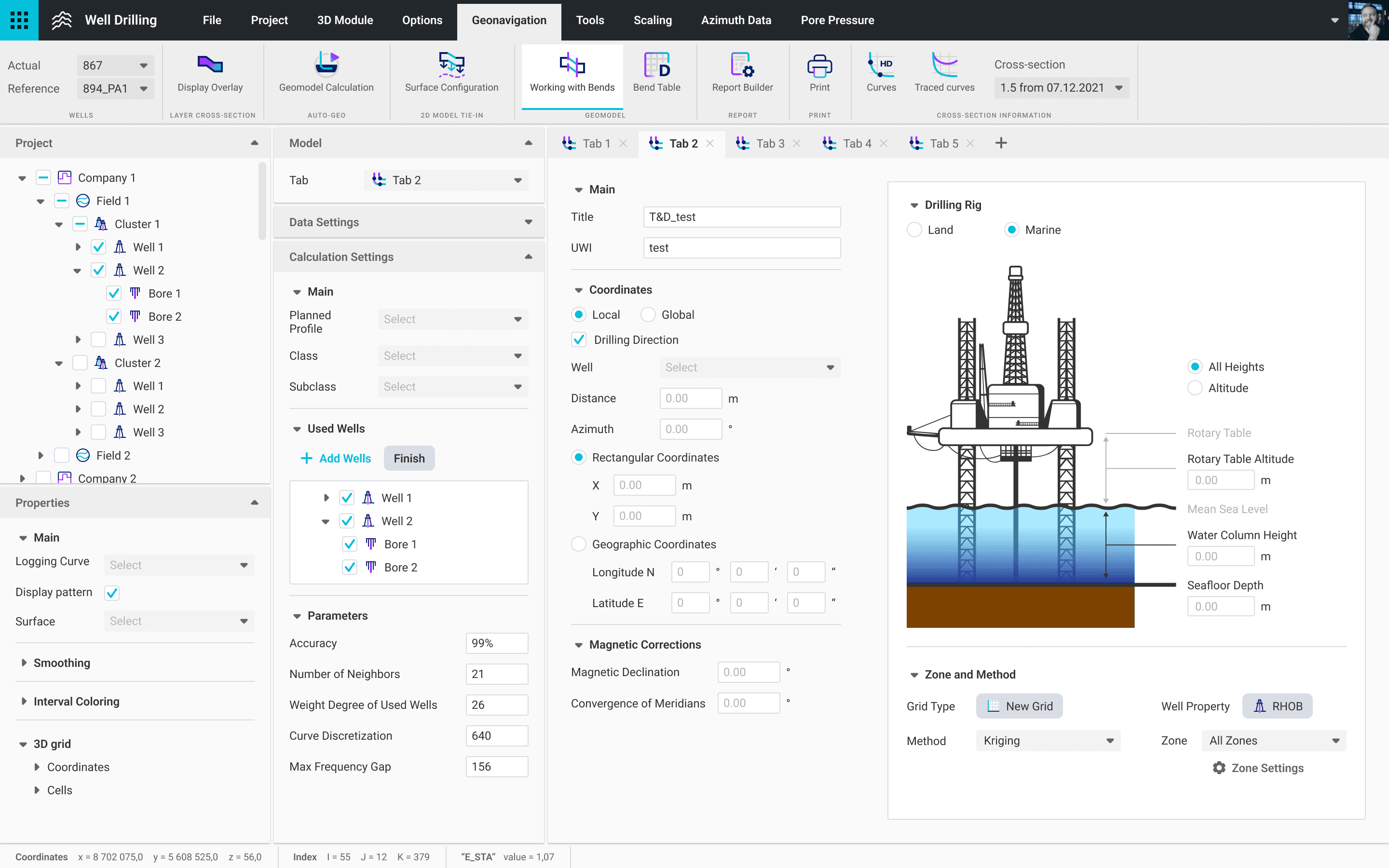
- Aligned UI/UX of these modules to optimize value/effort ratio.

My role

- UI/UX design
- Wireframes / Prototypes
- Design hand-off
- Presentations
- UI kit development
- Team consultancy

Team

- Project Manager
- Analyst
- UX/Product Designer
- 2 Industrial Engineers
- 3 Developers
- QA
- Consultants from other teams
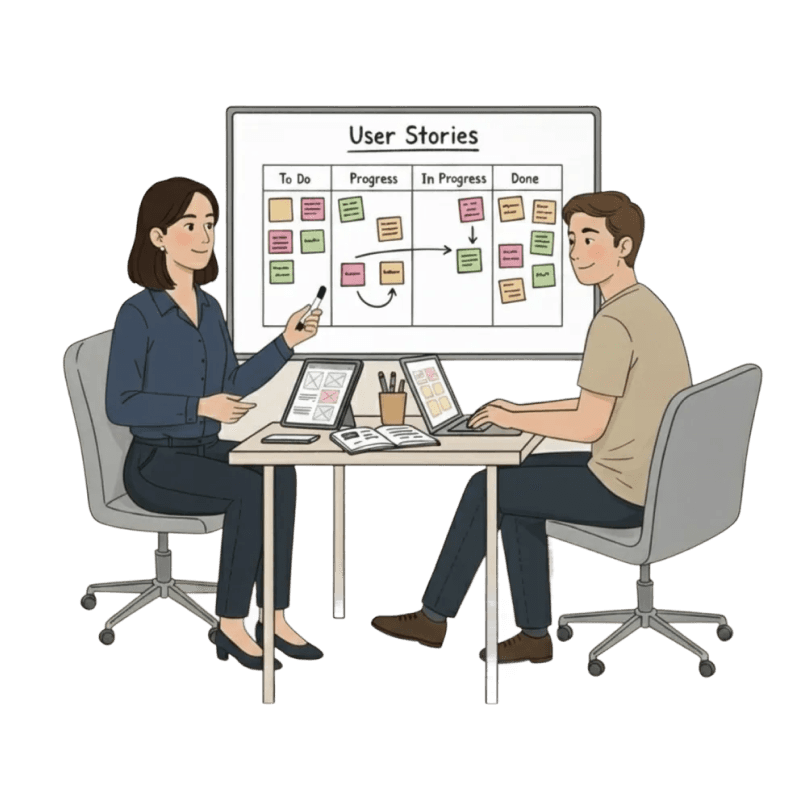
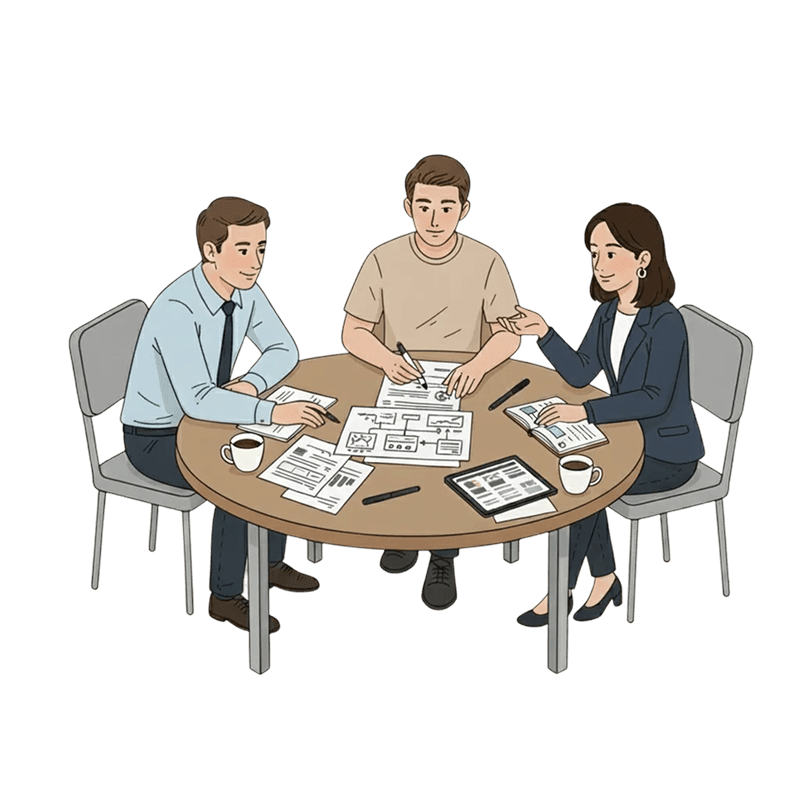
Result

Extensively refactored numerous modules, enhancing their UI/UX. These improvements greatly supported the marketing department's advertising and sales efforts.

Users

B2B customers, professionals in the oil/gas industry.

Previously, they purchased individual modules with varying authorization methods. Now, we aimed to offer an all-in-one tool for those monitoring and analyzing on-site situations in real-time.

Challenges

Alignment points and release sequence were crucial. Some modules began development years ago, while others were more recent. Technical aspects varied significantly, including differences in UI frameworks and UX patterns across tools.

Duration

>1 year

Tools

Figma, Jira, Confluence

Show design process

Task

It can come from:

Client
Big conceptual undefined requests.

Product Owner
User stories that need analysis, targeted on business needs.

Myself
Features and tunings to improve UX of final users.

Tasks can be:

Simple
You just do it. All the other team knows exactly how to do it.

Complex
Nobody knows what the result will be, me included. These 30% of tasks - fuel for number of ideation workshops, analysis, iteration, user research and hours of discussions.

Draft & users

If task is "simple", I have two checks of wireframes:

With Product Owner
If design answered business requirements.

With developers
If we can simplify design (without losing in UX) to speed up time to market.

If task is "complex", plus to those two I also have:

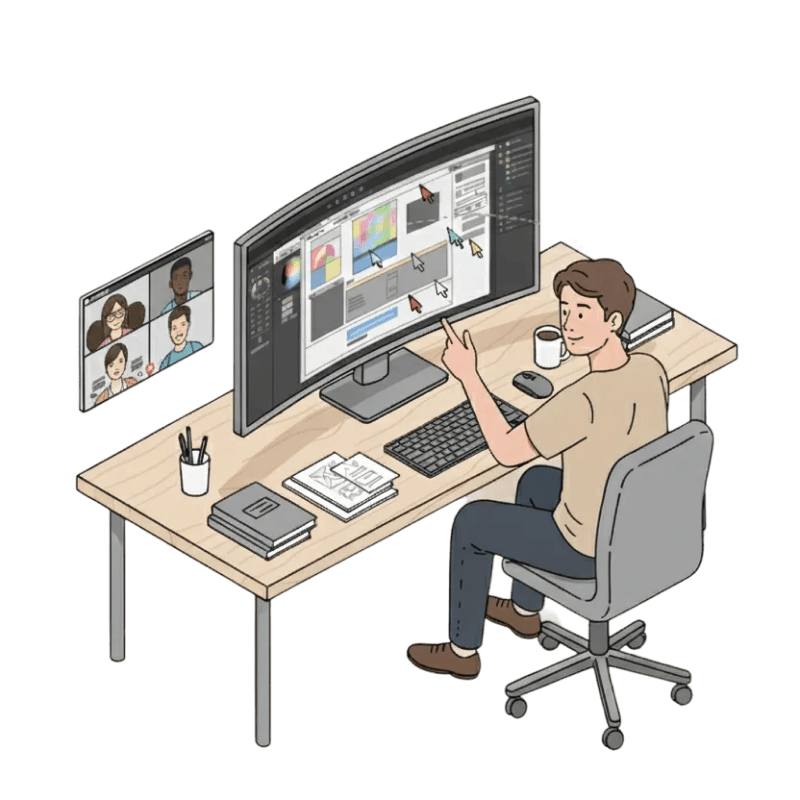
Brainstorm session with client
Sometimes it about them reinventing the whole business process. Sometimes it me to guide them into the right direction.

User interviews
30-minutes calls with users where they perform some tasks on clickable prototype. Depends on my hypothesis proven or rejected, the Draft stage can have another iteration.

UI & hand-off

90% of time
I work with predefined design systems. So I build the entire UI from its components.

10% of time -
some unique solutions where discussion with developers is needed.

After we discussed the final design with the team, I prepare mockups (flows, comments, documentation if needed).

When someone starts to work on this task in sprint they invite me on the tasks kick-off, where we check everything we need to do.

After the task is ready, I have a design review during the task demo or myself on the dev stage.

Release

As I work in-house, I have control on what happens after the release.

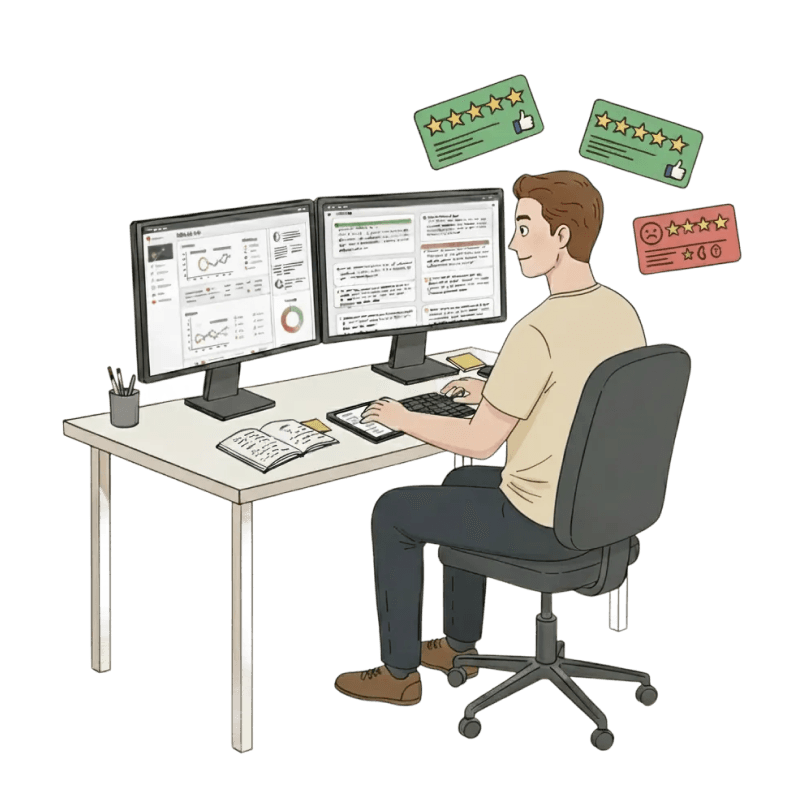
If feedback is negative and prioritized, I analys it it and go on the next iteration of design.

If feedback is positive, I can propose that new feature/pattern/flow for another product in our ecosystem. Yes, I test design innovations on selected products before the whole-ecosystem implementation.

Task

It can come from:

Client
Big conceptual undefined requests.

Product Owner
User stories that need analysis, targeted on business needs.

Myself
Features and tunings to improve UX of final users.

Tasks can be:

Simple
You just do it. All the other team knows exactly how to do it.

Complex
Nobody knows what the result will be, me included. These 30% of tasks - fuel for number of ideation workshops, analysis, iteration, user research and hours of discussions.

Draft & users

If task is "simple", I have two checks of wireframes:

With Product Owner
If design answered business requirements.

With developers
If we can simplify design (without losing in UX) to speed up time to market.

If task is "complex", plus to those two I also have:

Brainstorm session with client
Sometimes it about them reinventing the whole business process. Sometimes it me to guide them into the right direction.

User interviews
30-minutes calls with users where they perform some tasks on clickable prototype. Depends on my hypothesis proven or rejected, the Draft stage can have another iteration.

UI & hand-off

90% of time
I work with predefined design systems. So I build the entire UI from its components.

10% of time -
some unique solutions where discussion with developers is needed.

After we discussed the final design with the team, I prepare mockups (flows, comments, documentation if needed).

When someone starts to work on this task in sprint they invite me on the tasks kick-off, where we check everything we need to do.

After the task is ready, I have a design review during the task demo or myself on the dev stage.

Release

As I work in-house, I have control on what happens after the release.

If feedback is negative and prioritized, I analys it it and go on the next iteration of design.

If feedback is positive, I can propose that new feature/pattern/flow for another product in our ecosystem. Yes, I test design innovations on selected products before the whole-ecosystem implementation.

Show design process

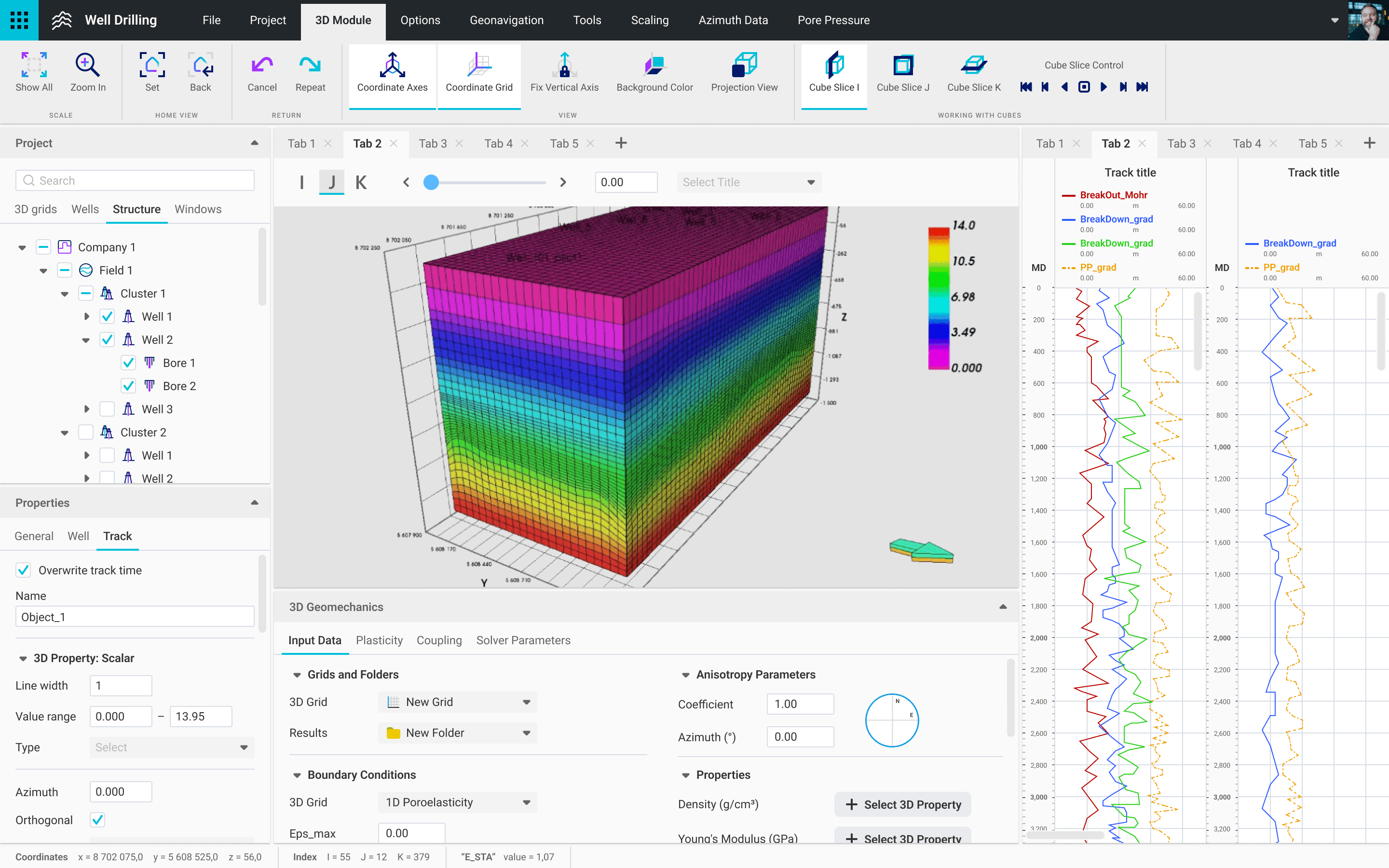
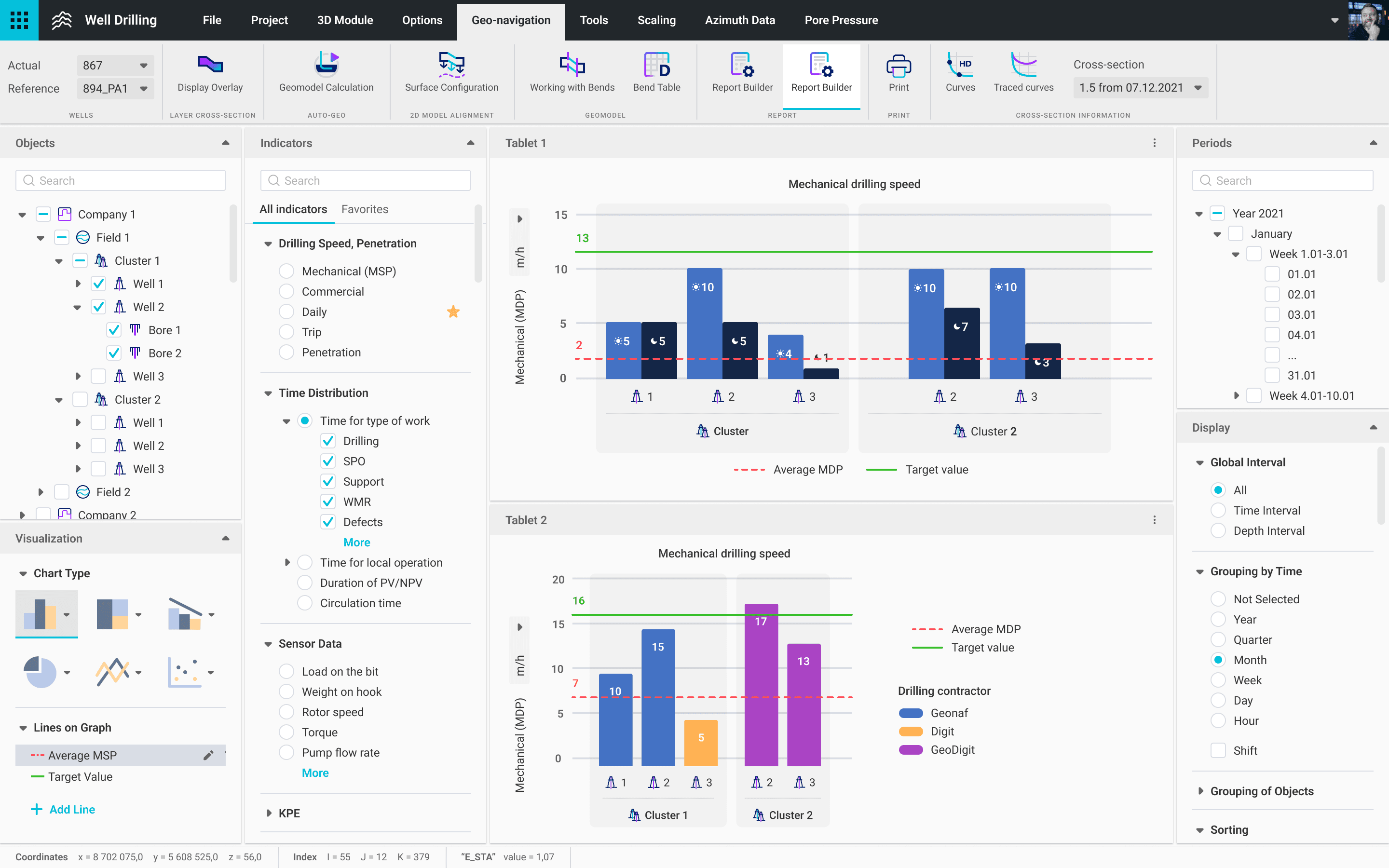
It’s like Microsoft Office: it has Word, Excel, PowerPoint, Outlook, and a bunch of other programs that are essential for various work with documents and management.

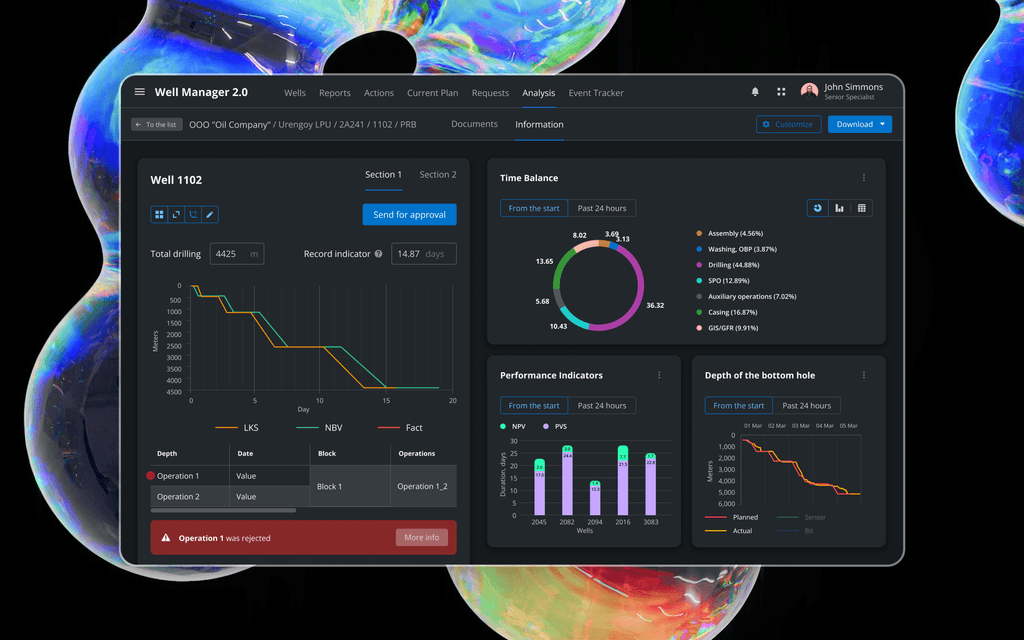
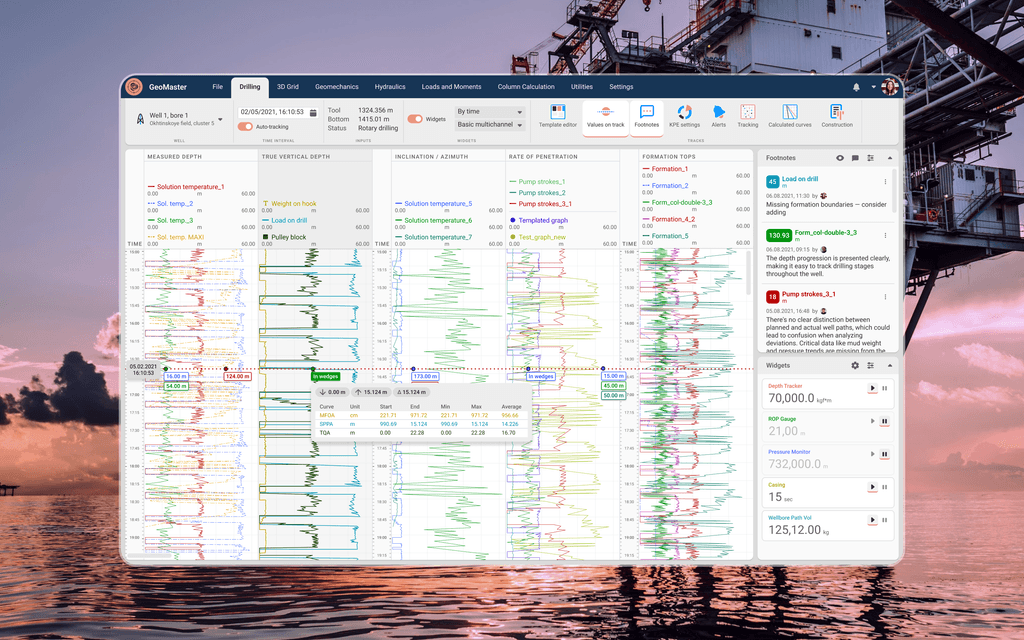
It's the same for drilling engineers: a super-application consisting of small modules for different purposes that are common in geodesy, drilling, and similar work.

30%

boost in idea analysis speed

35%

reduction in new system development by implementing a design system

30%

boost in idea analysis speed

35%

reduction in new system development by implementing a design system

30%

boost in idea analysis speed

35%

reduction in new system development by implementing a design system

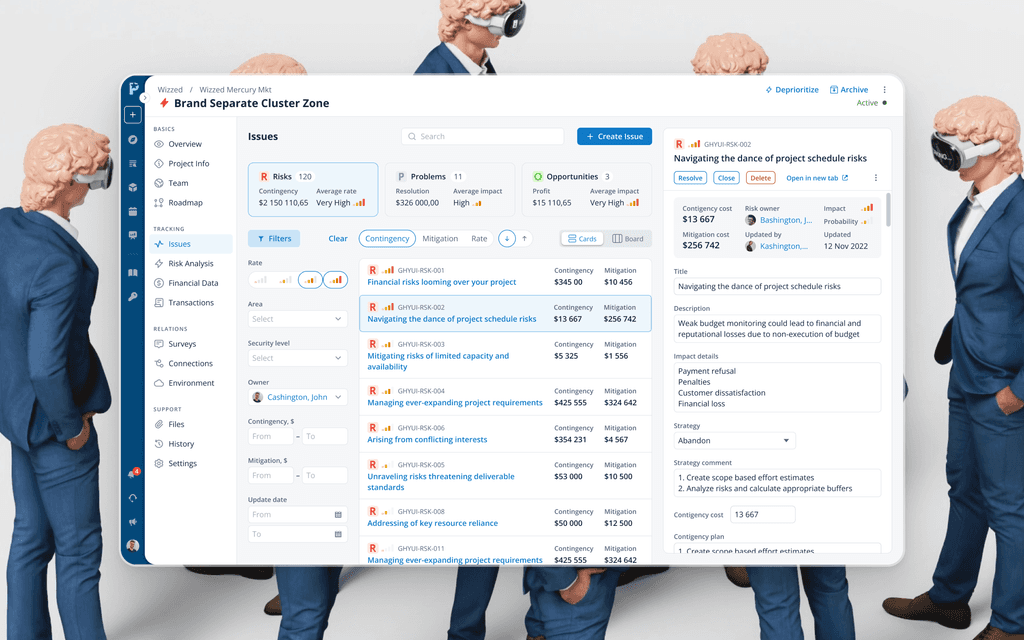
With all these modules, you can measure, analyze, visualize, report, hypothesize, and conduct experiments on what can happen with this or that oil well.

Almost total freedom in your work was built by me with unmeasurable help and consultancy from engineers that helped our team to get into specifics.

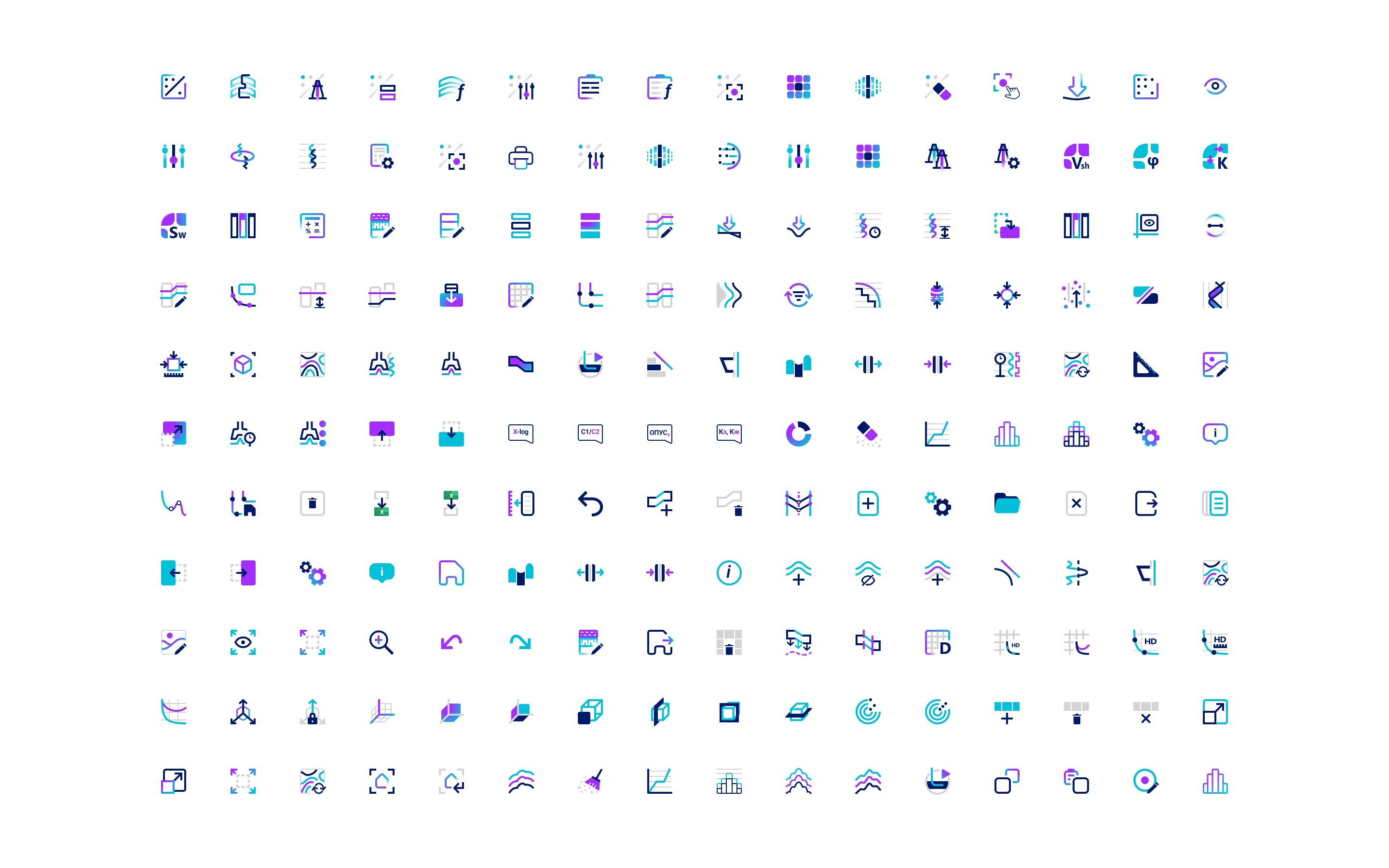
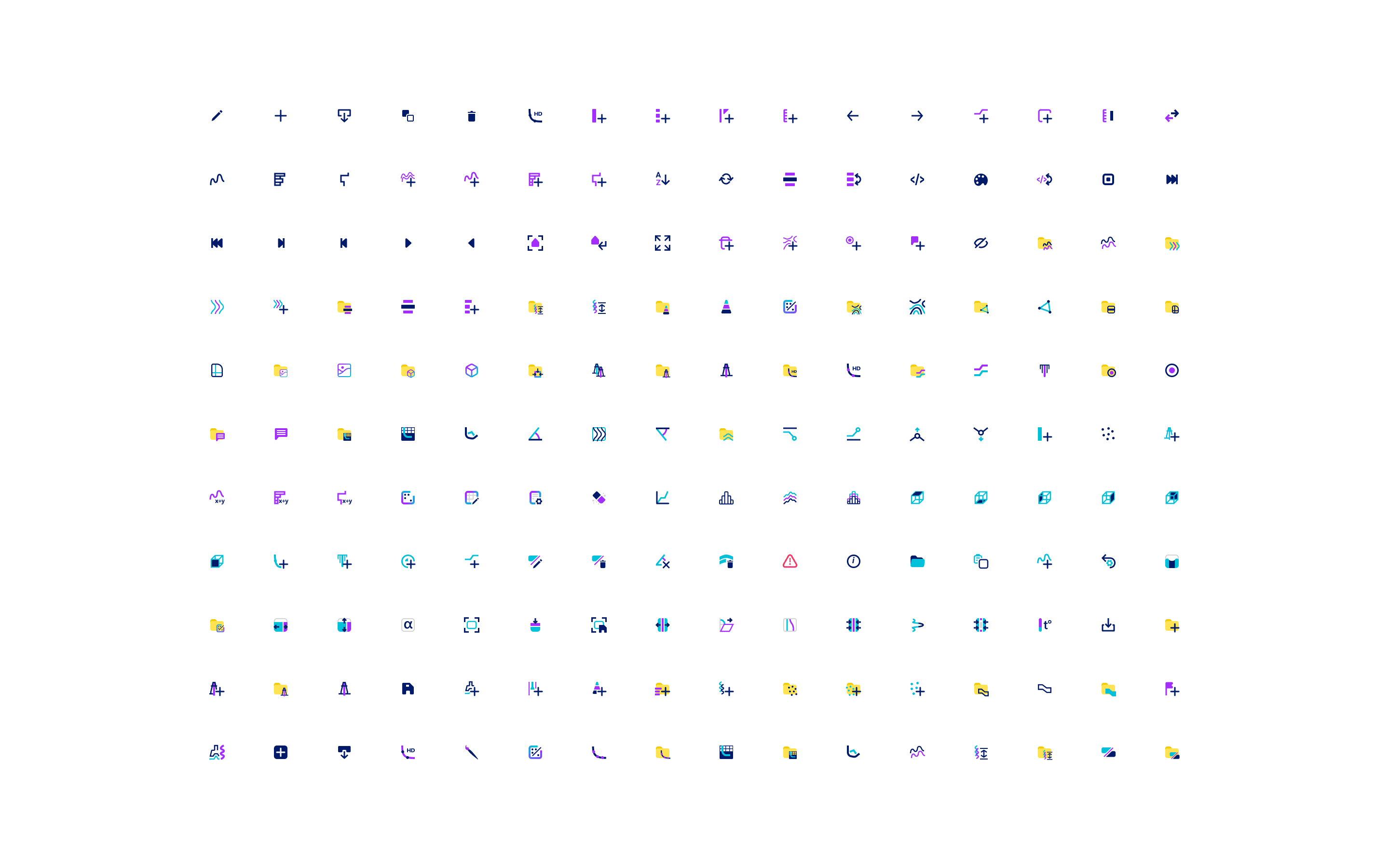
A large pack of oil-geo icons in a vibrant palette was included.

NDA disclaimer: The images shown on this page are drafts, concepts or high-fidelity wireframes and do not reflect the final product. All names, numbers, titles, charts, and other data are fictitious.

NDA disclaimer: The images shown on this page are drafts, concepts or high-fidelity wireframes and do not reflect the final product. All names, numbers, titles, charts, and other data are fictitious.

NDA disclaimer: The images shown on this page are drafts, concepts or high-fidelity wireframes and do not reflect the final product. All names, numbers, titles, charts, and other data are fictitious.