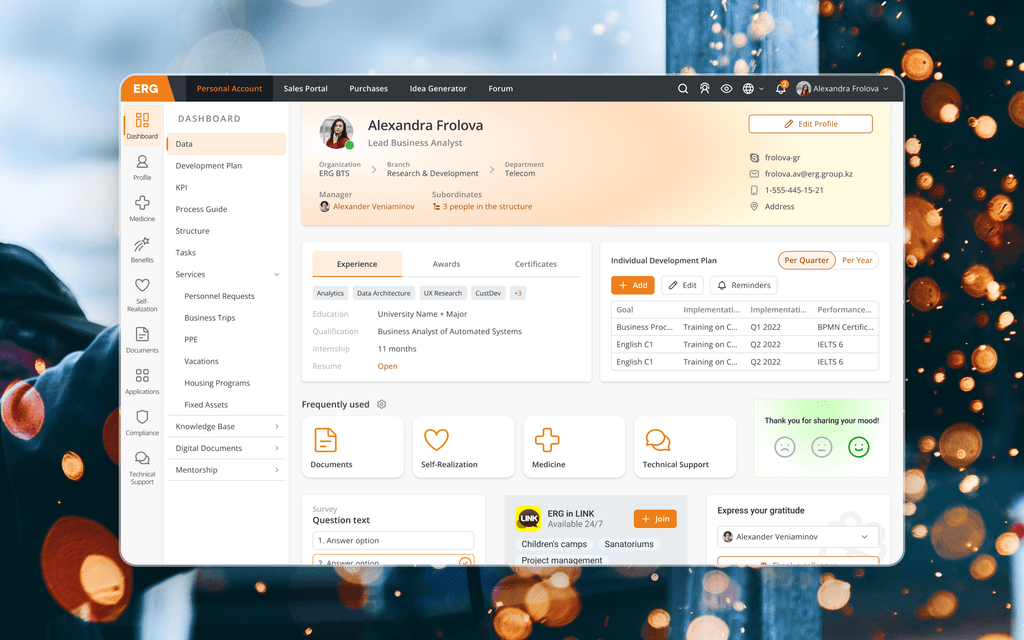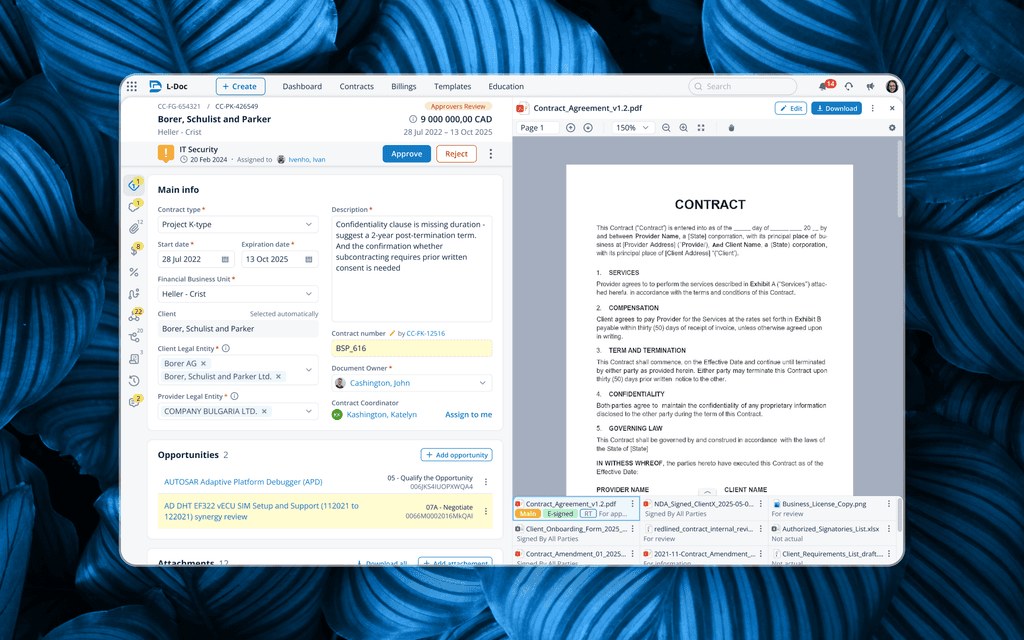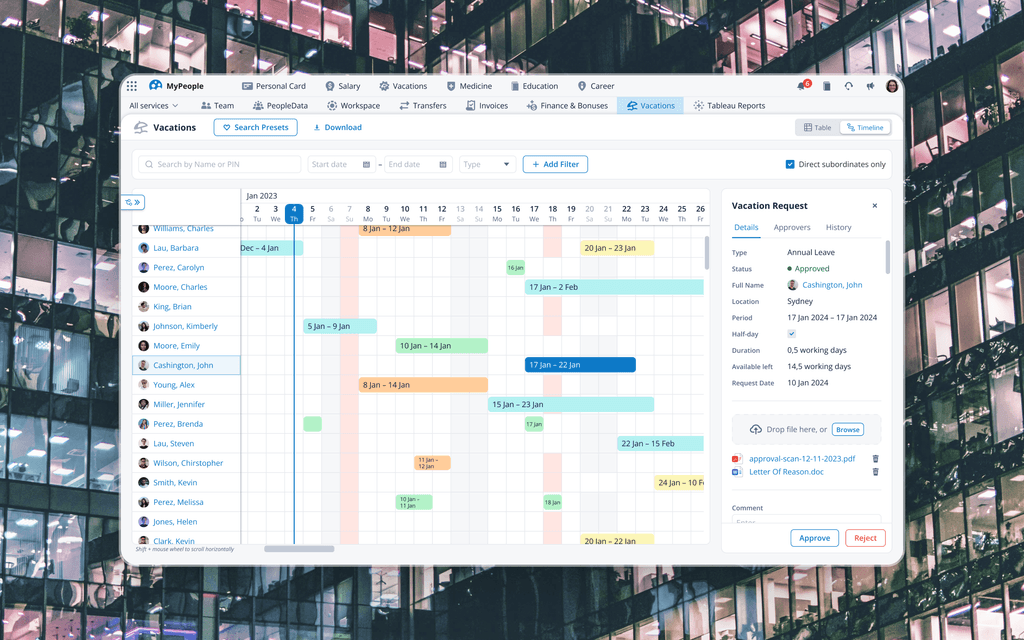

Disclaimer: This is an internal research, not a shipped product. Treat it like a playground to discover new ways to interact with AI.
Backstory
Back in 2022/23 I was working Electronic Document Management System - an all-in-one tool for legal specialist (and all involved) to manage the contract processing a large company.
At some point I had to design a rather peculiar feature: map of interdependencies between contracts between clients/legal entities/countries within years.
At that time I found a compromise solution between users need, cost of development and time-to-market speed. I put this feature to my own backlog since I understood it could be upgraded within couple of years.
2026
DXC Luxoft's internal Business Applications unit (where I'm leading the UX Design Team) is already in the process of AI integration. But mostly in the code development.
In the beginning of the year, I started the research project within the Design Team:
How to integrate AI into UX keeping human experience first
Product tries to use AI to simplify tasks for non-power users (HR, legals, managers, etc.)
Product teams integrate a usual "AI chat"
To get the most of the omnibar, users need to be good at prompting, understanding AI work principles, clearly formulating their wishes
If you can do these, you're probably a power user and you're okay with chat aka command line
But our users are not power users, that's why we want to integrate AI within the products they use
But here is
the Problem
I built the prototype with an idea in mind:
How an improved Human-AI interaction would look like?
Just a playground for me to research:
Why do I use 'Human-AI Interaction' wording?
Similar to HCI - Human-Computer Interaction (and HMI).
HCI once moved computers from the command line (power users) to graphical interfaces (common users).
Human-AI Interaction will explore and implement how ordinary users can interact with AI without complications. To move interaction from chats to integrated experience and control.
HMI → HCI → HAII
Back to my research
DXC Luxoft's internal Business Applications unit (where I'm leading the UX Design Team) is already in the process of AI integration. But mostly in the code development.
In the beginning of the year, I started the research project within the Design Team:
How to integrate AI into UX keeping human experience first
HAII principles behind
1
User should be able use just one hand
Don't expect two hands on the keyboard, speed typing, voice input. Not all people are used to these. Most use a mouse in almost all the tasks.
2
Show the user what they can do.
Suggestions, predictions, options wherever they could be.
3
Expand familiar functionality.
E.g., filters are familiar. But AI can create filters on the fly, which weren't there originally.
4
AI features shouldn't be 100% AI
Facts that AI extracted from BD - separately, AI analysis/interpretations/creativity - separately. Highlight the difference clearly.
5
Focus on what can't be hardcoded
But at the same time, it looks like something a skilled human could create.
6
To avoid mistrust, it shouldn't look like "magic"
More down-to-earth. Less opportunities for user to doubt.
7
Don't do it for the user
A lot to validation: AI solutions are just suggested, and the user has all tools to fine-tune it.
Disclaimer: This is not a real AI. It's an imitation for research and demonstration purposes. Its feedback and results are based on the internal BD filled with a mocked data.


Results
We started the internal pilot project to make live tests of some of suggested approach. Outcomes are yet to be discovered, but it'll be a big step into development of new approaches.
I've already scaled UX approaches among products within companies - and what I research now is just an obvious next step.
Foundation for the expertise was set.
And once again: