Goals

Provide exclusive features for the PMO to become the all-in-one tool for project managers.

- Minimize reliance on third-party tools,
- Introduce distinct functionalities not found in other PMO software,
- Lower maintenance expenses by advocating for in-house solutions,
- Enhance user experience and ensure alignment and integration with other enterprise systems.

My role

- UX/UI/Product design
- User research
- Wireframes / Prototypes
- Stakeholder management
- Design hand-off
- Reviews and docs
- Presentations
- Facilitating workshops
- Feature proposals
- Design system development
- Team consultancy

Team

- 5 key stakeholders
- Product Owner
- Analysts
- UX/Product Designer
- 4-5 Developers
- QA

Duration

2,5 years

Result

Designed over 40+ features for the project management office, decreasing managers' reliance on third-party tools by 90%.

Users

1. ~2000 project managers overseeing projects with a need to track the current state and perform regular internal and external audits,
2. A small revision department (~30 people) ensuring project goals, standards, and processes compliance.

The PMO serves as a tracking tool tailored with distinct feature combinations for each group.

Challenges

- Project managers are accustomed to using various tools like Jira, Google Spreadsheet, Slack, and Tableau. Our challenge was to incorporate familiar patterns while meeting business needs.
- Transitioning systems wasn't a straightforward process. We navigated through multiple launch stages — MVP, alpha, beta — while integrating two systems simultaneously.

Tools

Figma, Miro, Jira, Confluence, ChatGPT, Kendo UI
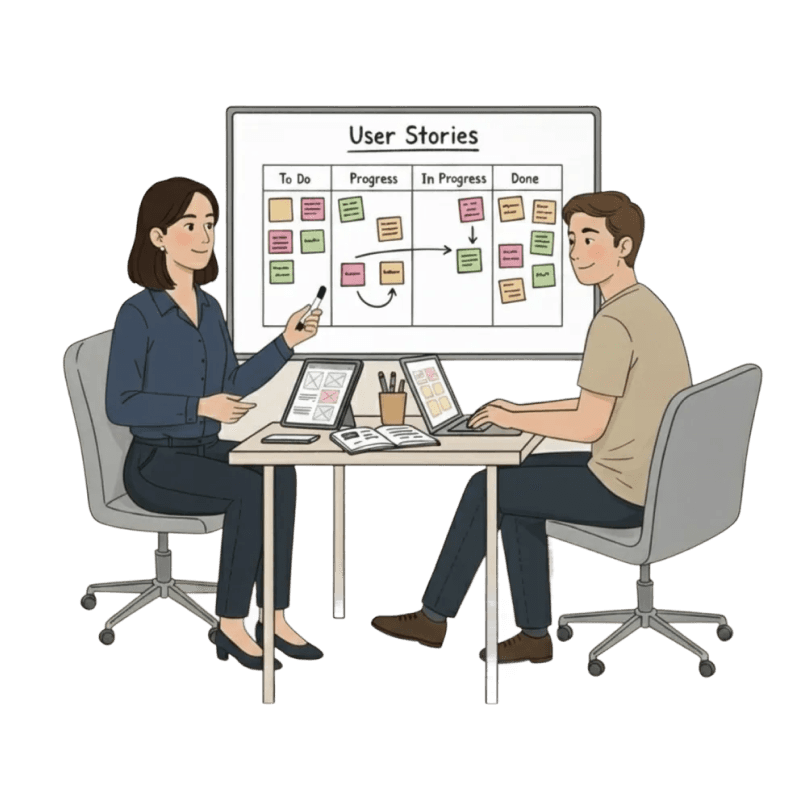
Show design process

Task

It can come from:

Client
Big conceptual undefined requests.

Product Owner
User stories that need analysis, targeted on business needs.

Myself
Features and tunings to improve UX of final users.

Tasks can be:

Simple
You just do it. All the other team knows exactly how to do it.

Complex
Nobody knows what the result will be, me included. These 30% of tasks - fuel for number of ideation workshops, analysis, iteration, user research and hours of discussions.

Draft & users

If task is "simple", I have two checks of wireframes:

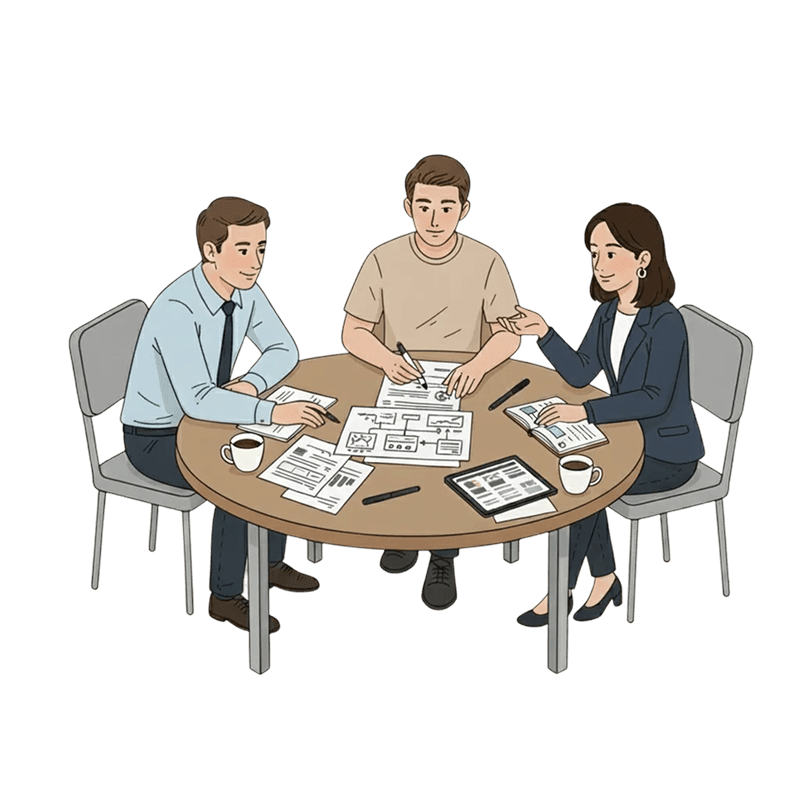
With Product Owner
If design answered business requirements.

With developers
If we can simplify design (without losing in UX) to speed up time to market.

If task is "complex", plus to those two I also have:

Brainstorm session with client
Sometimes it about them reinventing the whole business process. Sometimes it me to guide them into the right direction.

User interviews
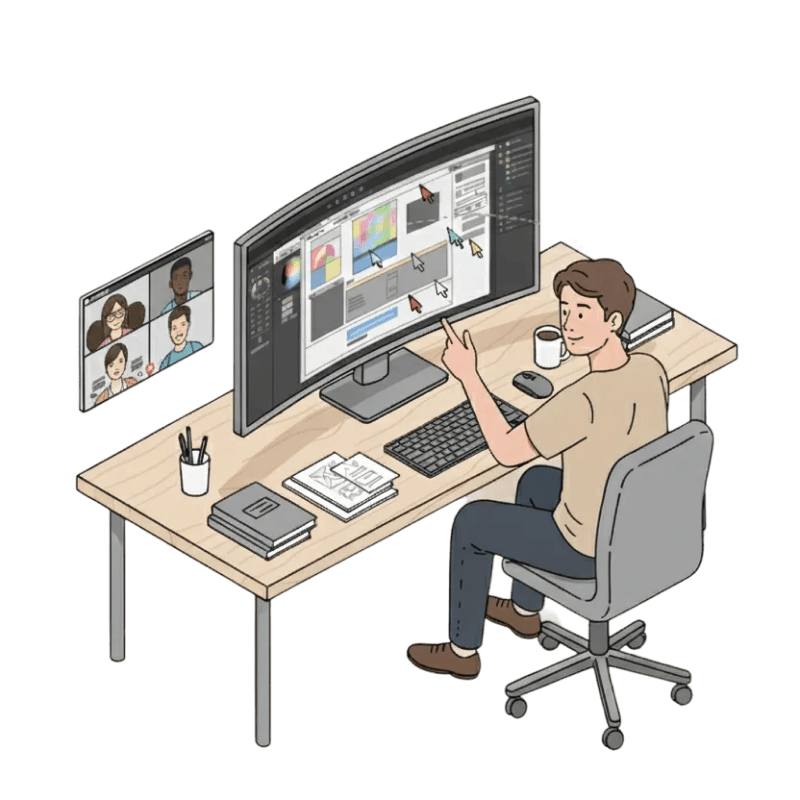
30-minutes calls with users where they perform some tasks on clickable prototype. Depends on my hypothesis proven or rejected, the Draft stage can have another iteration.

UI & hand-off

90% of time
I work with predefined design systems. So I build the entire UI from its components.

10% of time -
some unique solutions where discussion with developers is needed.

After we discussed the final design with the team, I prepare mockups (flows, comments, documentation if needed).

When someone starts to work on this task in sprint they invite me on the tasks kick-off, where we check everything we need to do.

After the task is ready, I have a design review during the task demo or myself on the dev stage.

Release

As I work in-house, I have control on what happens after the release.

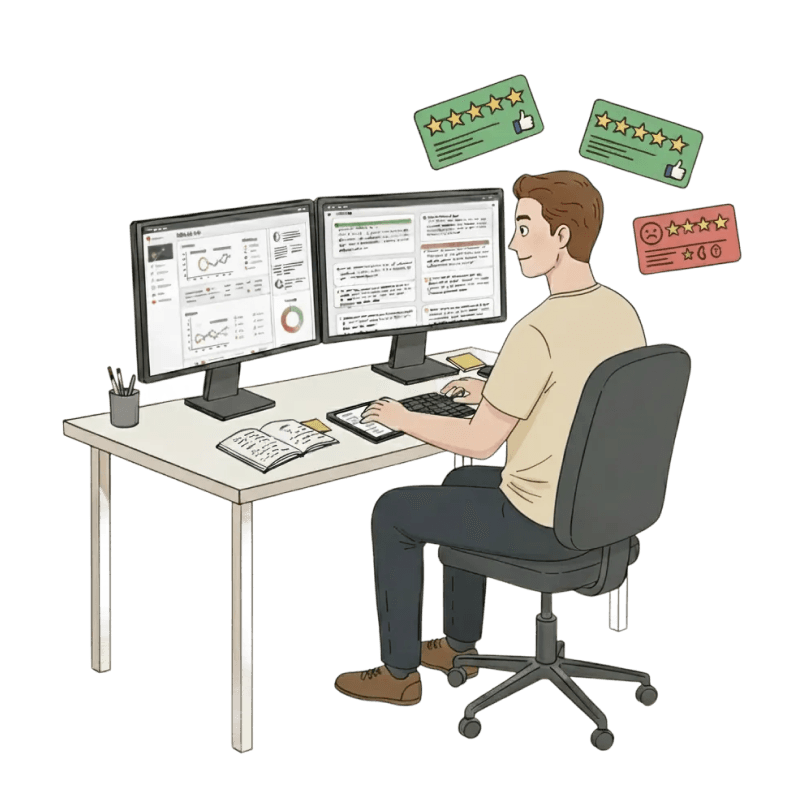
If feedback is negative and prioritized, I analys it it and go on the next iteration of design.

If feedback is positive, I can propose that new feature/pattern/flow for another product in our ecosystem. Yes, I test design innovations on selected products before the whole-ecosystem implementation.

Task

It can come from:

Client
Big conceptual undefined requests.

Product Owner
User stories that need analysis, targeted on business needs.

Myself
Features and tunings to improve UX of final users.

Tasks can be:

Simple
You just do it. All the other team knows exactly how to do it.

Complex
Nobody knows what the result will be, me included. These 30% of tasks - fuel for number of ideation workshops, analysis, iteration, user research and hours of discussions.

Draft & users

If task is "simple", I have two checks of wireframes:

With Product Owner
If design answered business requirements.

With developers
If we can simplify design (without losing in UX) to speed up time to market.

If task is "complex", plus to those two I also have:

Brainstorm session with client
Sometimes it about them reinventing the whole business process. Sometimes it me to guide them into the right direction.

User interviews
30-minutes calls with users where they perform some tasks on clickable prototype. Depends on my hypothesis proven or rejected, the Draft stage can have another iteration.

UI & hand-off

90% of time
I work with predefined design systems. So I build the entire UI from its components.

10% of time -
some unique solutions where discussion with developers is needed.

After we discussed the final design with the team, I prepare mockups (flows, comments, documentation if needed).

When someone starts to work on this task in sprint they invite me on the tasks kick-off, where we check everything we need to do.

After the task is ready, I have a design review during the task demo or myself on the dev stage.

Release

As I work in-house, I have control on what happens after the release.

If feedback is negative and prioritized, I analys it it and go on the next iteration of design.

If feedback is positive, I can propose that new feature/pattern/flow for another product in our ecosystem. Yes, I test design innovations on selected products before the whole-ecosystem implementation.

Show design process

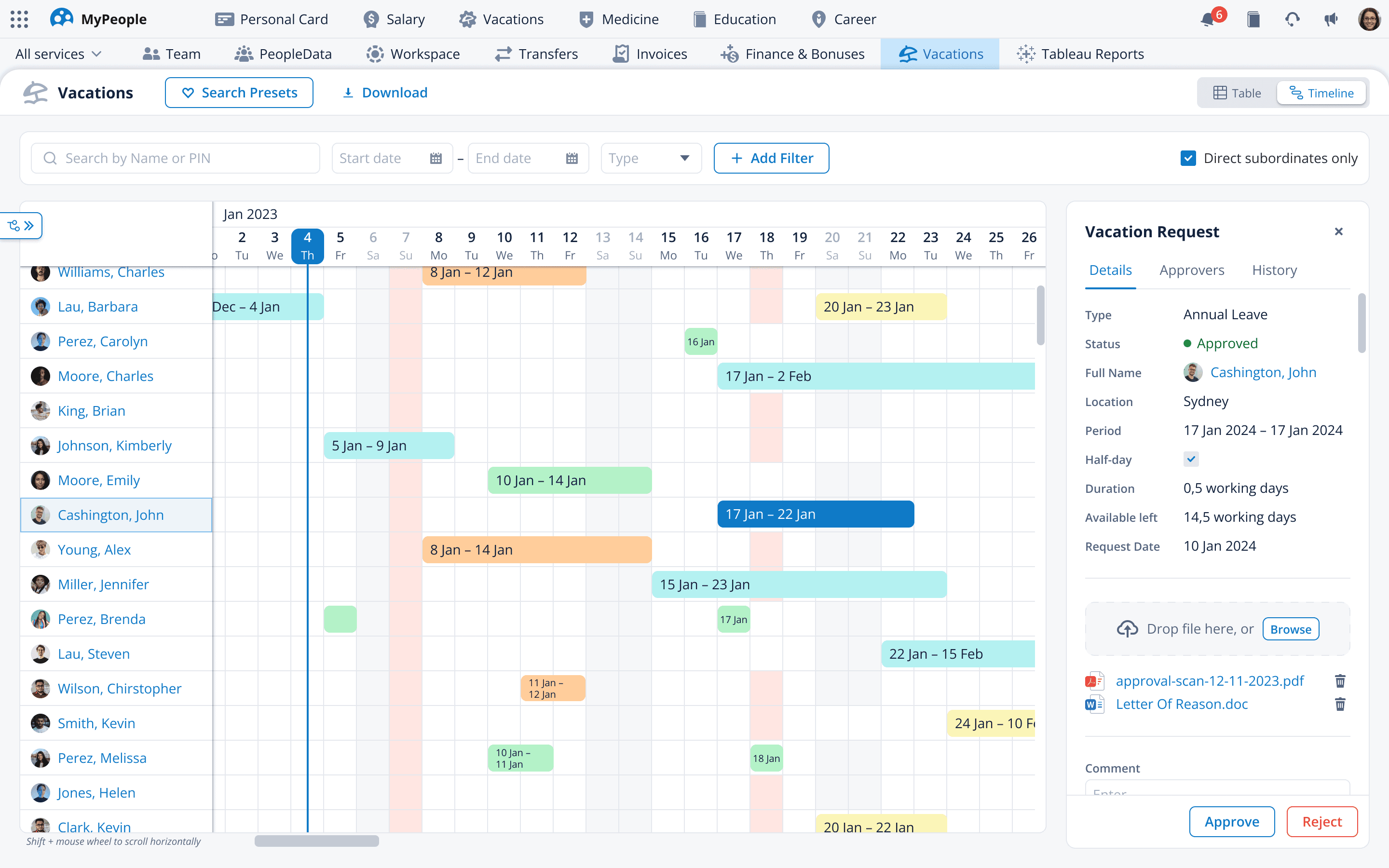
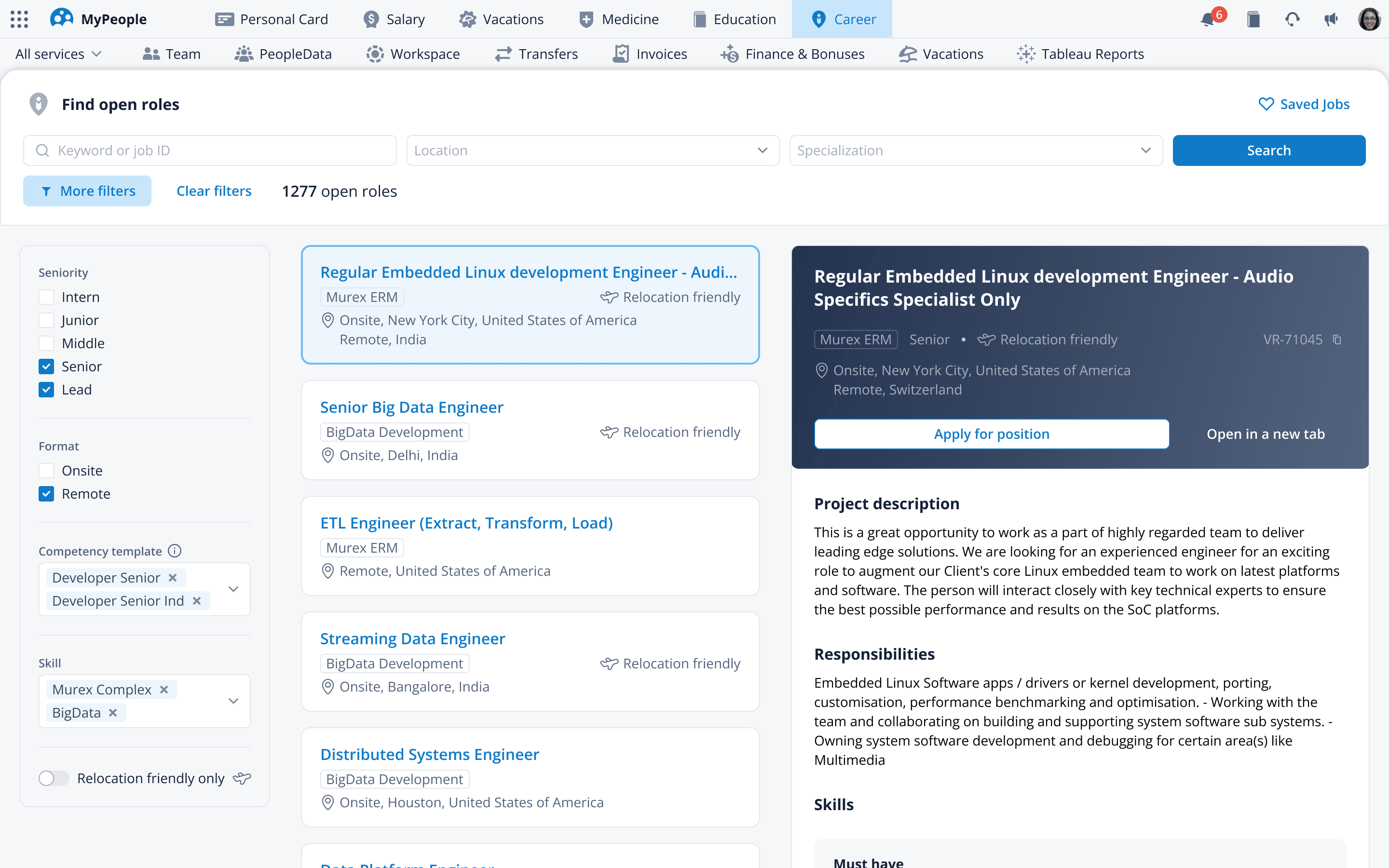
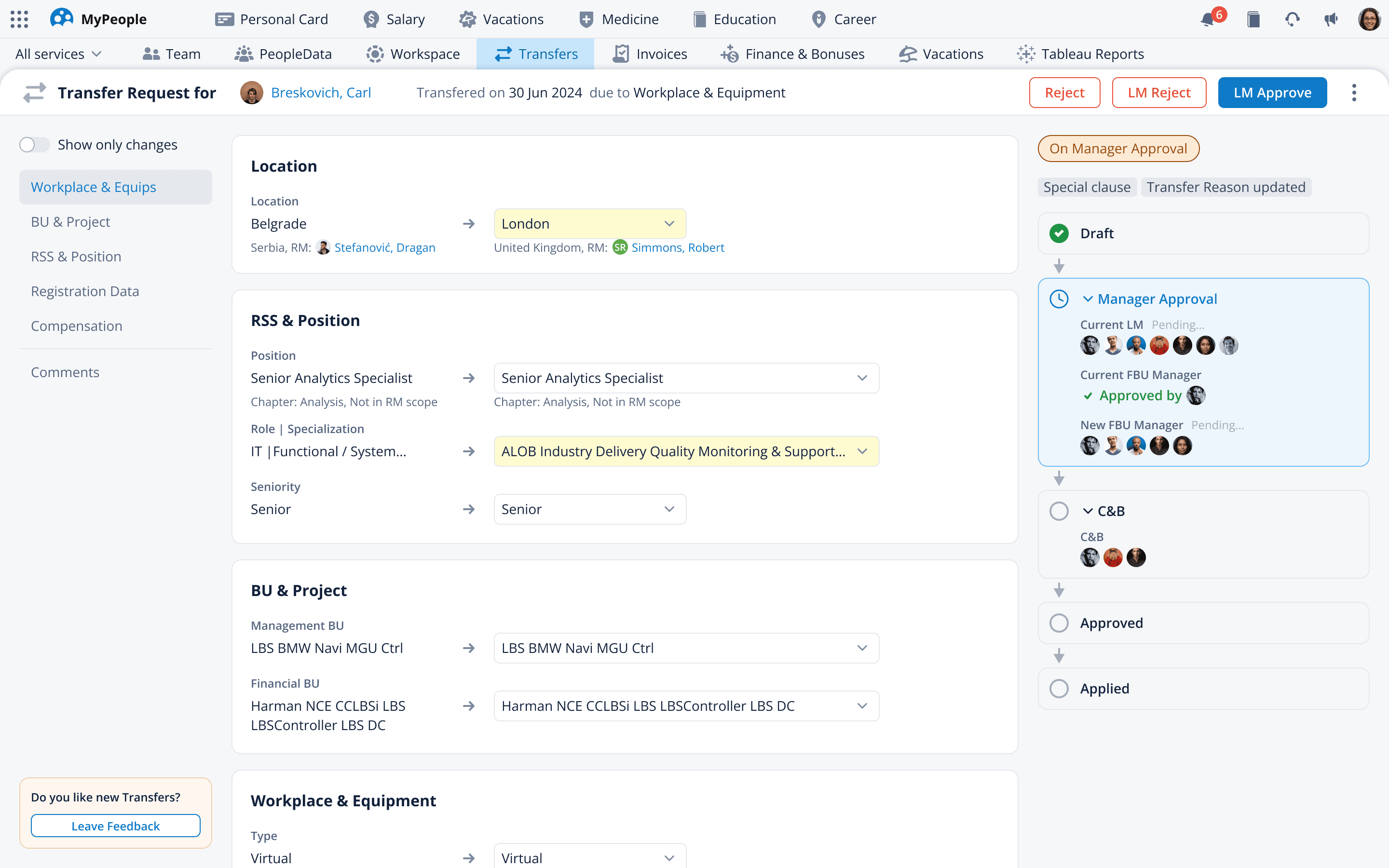
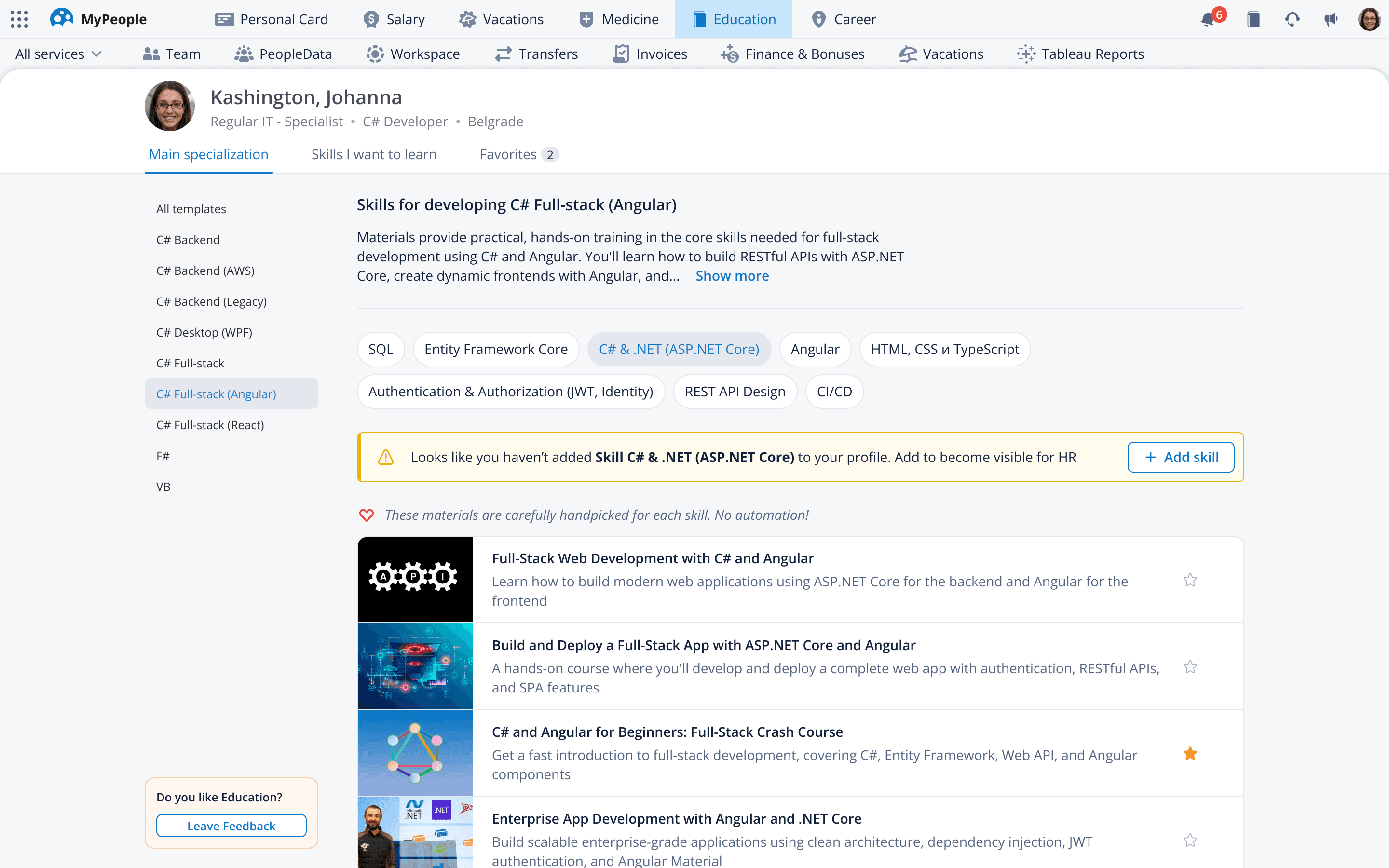
Project Management Offices (PMOs) help project managers connect, track, and measure the things in projects. Or at least they should.

Kidding aside, PMs have a lot of things to do besides filling out spreadsheets or reports. But like it or not, it's business, so there's no choice. But I, as a designer, can make the process easier and faster for PMs, so they can do everything they need to do in the PMO and get out of there ASAP - and focus on all those dozens of burning things.

10%

increase in sales per feature-requested release

1.2x

increase of frontend developmet speed after implementing designed UI kit

10%

increase in sales per feature-requested release

1.2x

increase of frontend developmet speed after implementing designed UI kit

10%

increase in sales per feature-requested release

1.2x

increase of frontend developmet speed after implementing designed UI kit

"Speed" is a key concept for this PMO.
One of the key tasks was to move PMs from Excel/Google spreadsheets to this system. Because, you know, spreadsheets are so fast to use, so customizable, and so convenient.

...until you have to pass the audit, or bring a new PM on board, or manage them over a long distance.

So we have the "speed" approach everywhere: in creating and analyzing questionnaires for clients, in managing project risks, and in completing weekly/quarterly reports. The faster you do all this, the more time you have to make money.

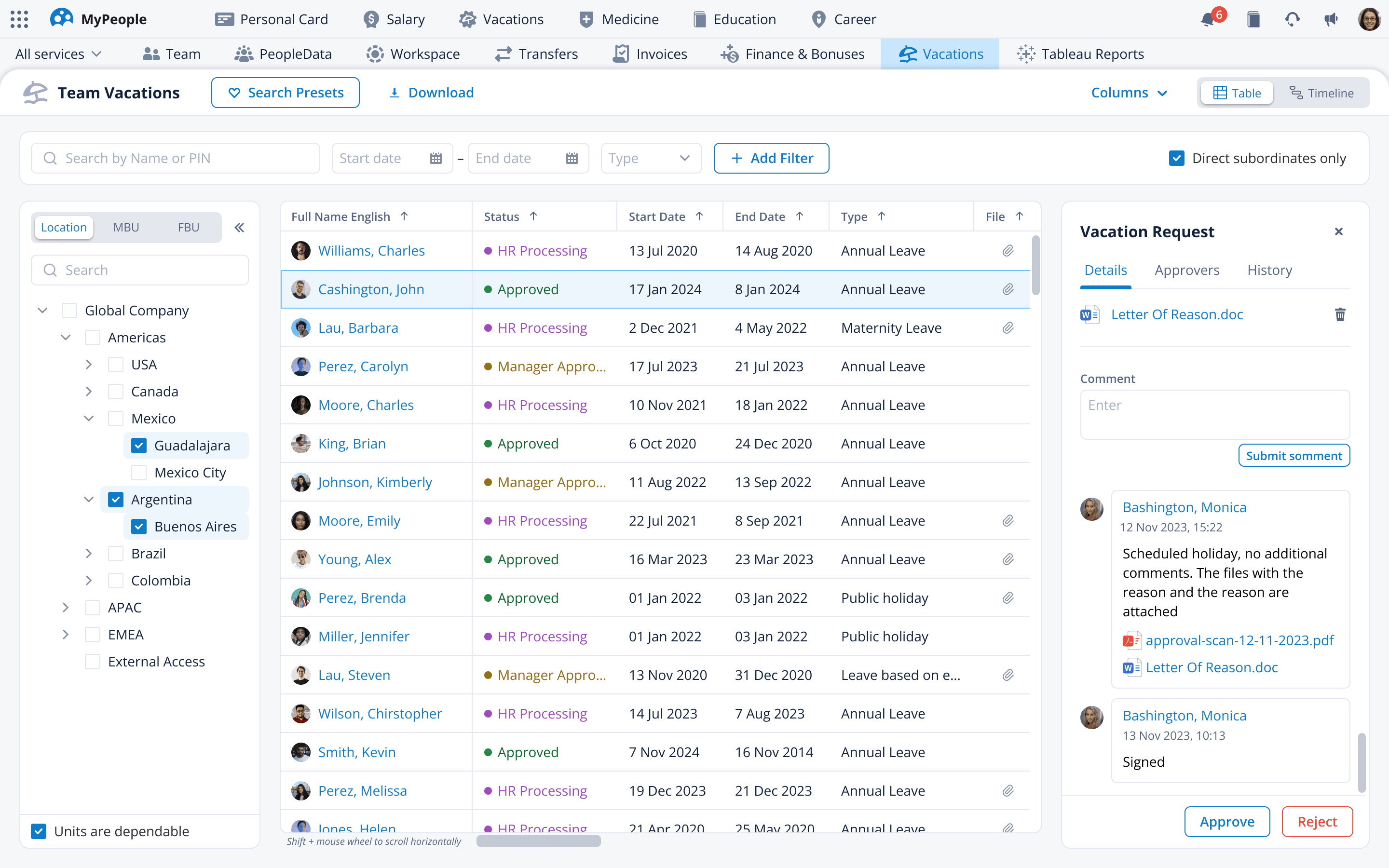
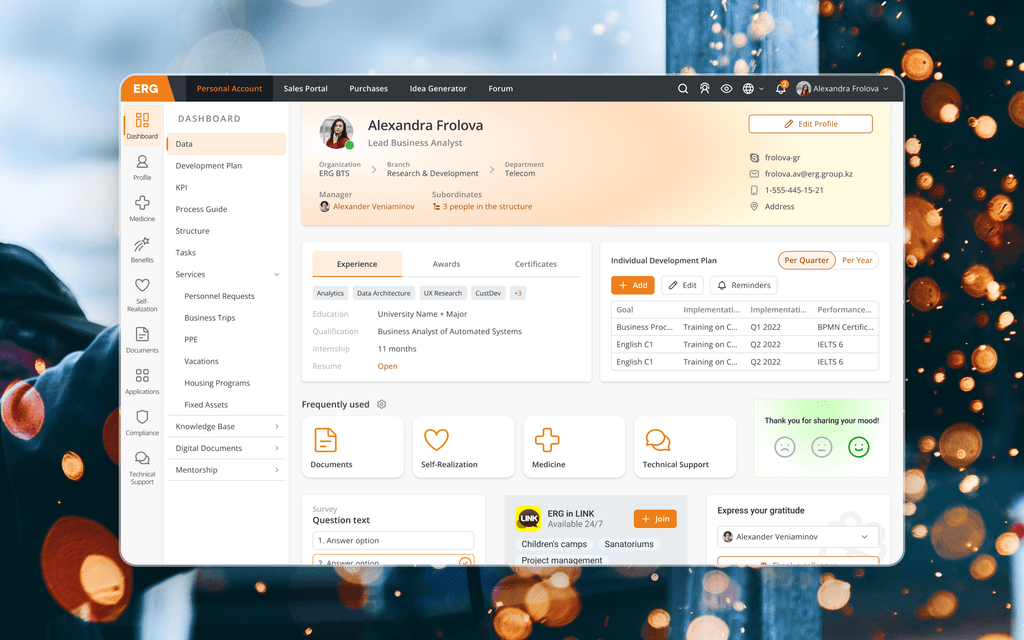
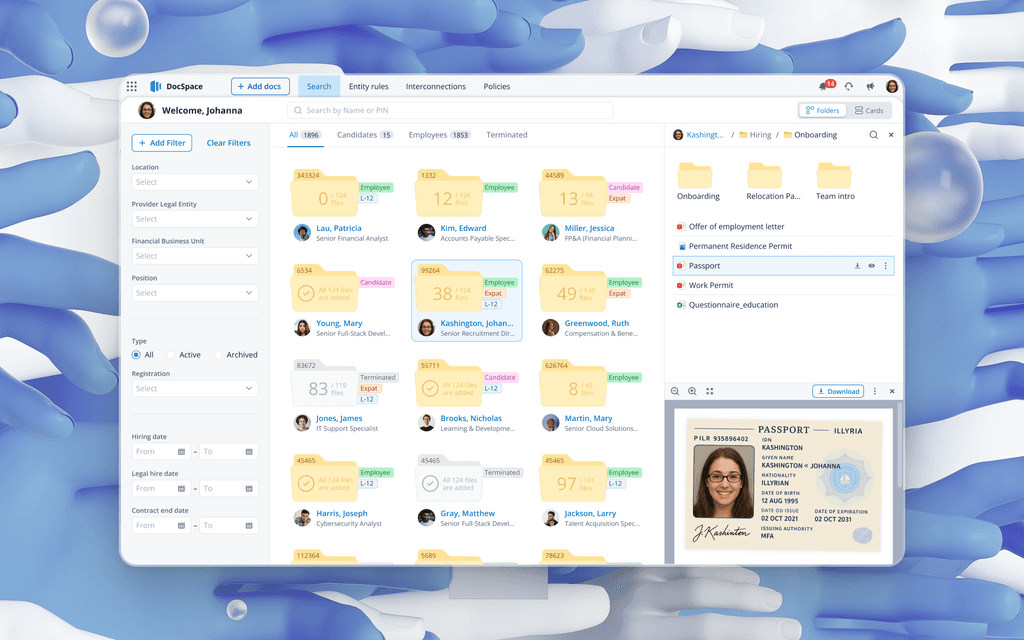
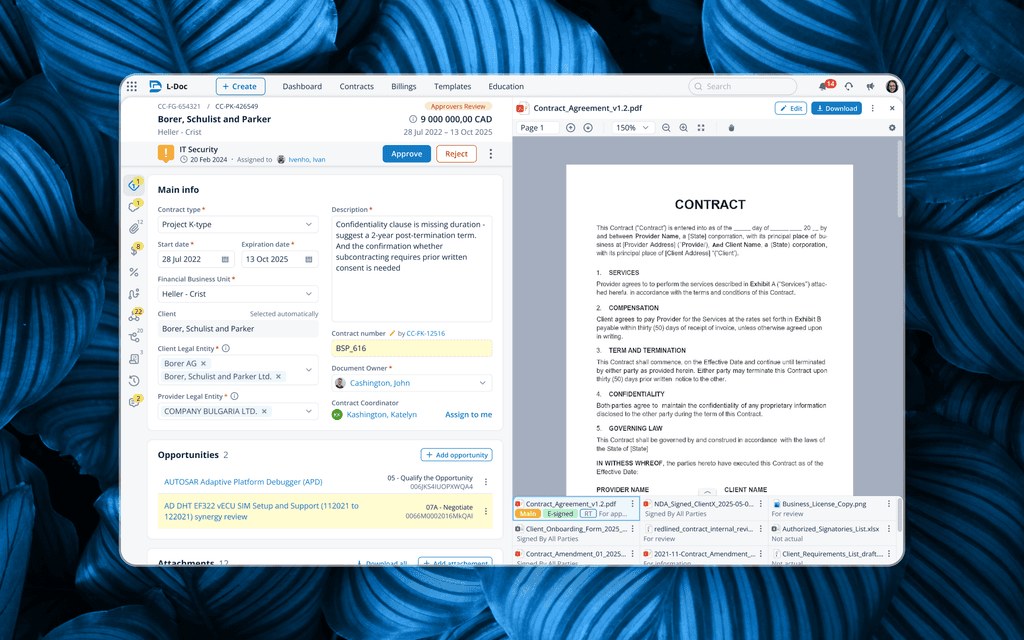
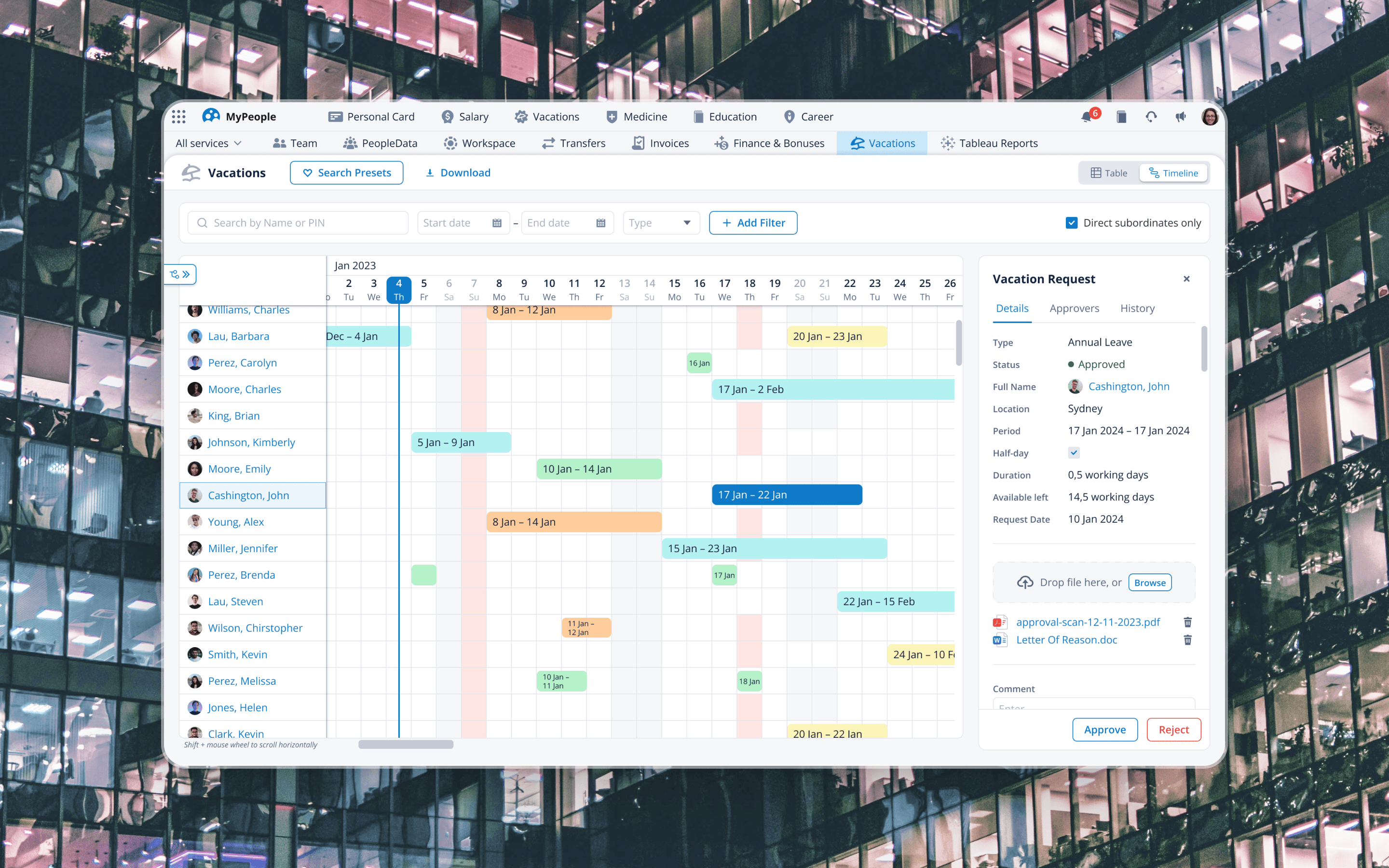
NDA disclaimer: The images shown on this page are drafts, concepts or high-fidelity wireframes and do not reflect the final product. All names, numbers, titles, charts, and other data are fictitious.

NDA disclaimer: The images shown on this page are drafts, concepts or high-fidelity wireframes and do not reflect the final product. All names, numbers, titles, charts, and other data are fictitious.

NDA disclaimer: The images shown on this page are drafts, concepts or high-fidelity wireframes and do not reflect the final product. All names, numbers, titles, charts, and other data are fictitious.